AAC blocks vs red brick vs fly-ash brick — the wall material choice
Three common walling choices. Red clay bricks (IS 1077) are the traditional default. AAC blocks (IS 2185 Part 3) are large, lightweight autoclaved-aerated-concrete blocks that build faster, insulate better and cut structural load — but need the right adhesive and care in wet areas. Fly-ash bricks (IS 12894) are a denser, eco-friendly alternative. In most modern framed buildings the walls are non-load-bearing infill, which is exactly where AAC's lightness pays off.
Red brick is the reliable old cast-iron pan — heavy, proven, works everywhere. AAC is the modern non-stick — lighter and quicker, but you must use it correctly (right mortar, no abuse in wet zones) or it disappoints. Neither is simply 'better'; they suit different jobs.
In a framed building, the walls between the columns carry no floors; they keep out weather, noise and people, and hold up your cupboards and pictures. That leaves a real choice of material. Red clay brick has been the Kolkata default for centuries. Fly ash bricks and AAC blocks are now common alternatives. Each one changes the weight on the frame, the speed of work, the comfort inside, the way plaster and fixings behave, and the checks you need.
This guide explains how each is made, compares them side by side, covers where each suits, why AAC walls crack and how to stop it, wet areas and outside walls, fixings, comfort in Kolkata's heat, the load on the frame, and the delivery checks. Our Brick vs AAC Block Comparator shows the difference in weight and quantities for your walls, and our brick checks guide covers clay bricks in detail.
How each is made
Red clay bricks are moulded from clay and fired in kilns. Around Kolkata they come from kilns along the rivers, and their quality depends on the clay and, above all, on the firing: well-burnt bricks are hard and ring when struck, under-burnt ones are soft and soak up water. IS 1077 sets their classes and tests.
Fly ash bricks are pressed from fly ash, the ash left by coal-fired power stations, with lime or cement and sand or stone dust, then cured rather than fired. They are grey, regular in size and smooth. IS 12894 covers them, and their quality depends heavily on the maker's mix, pressing and curing.
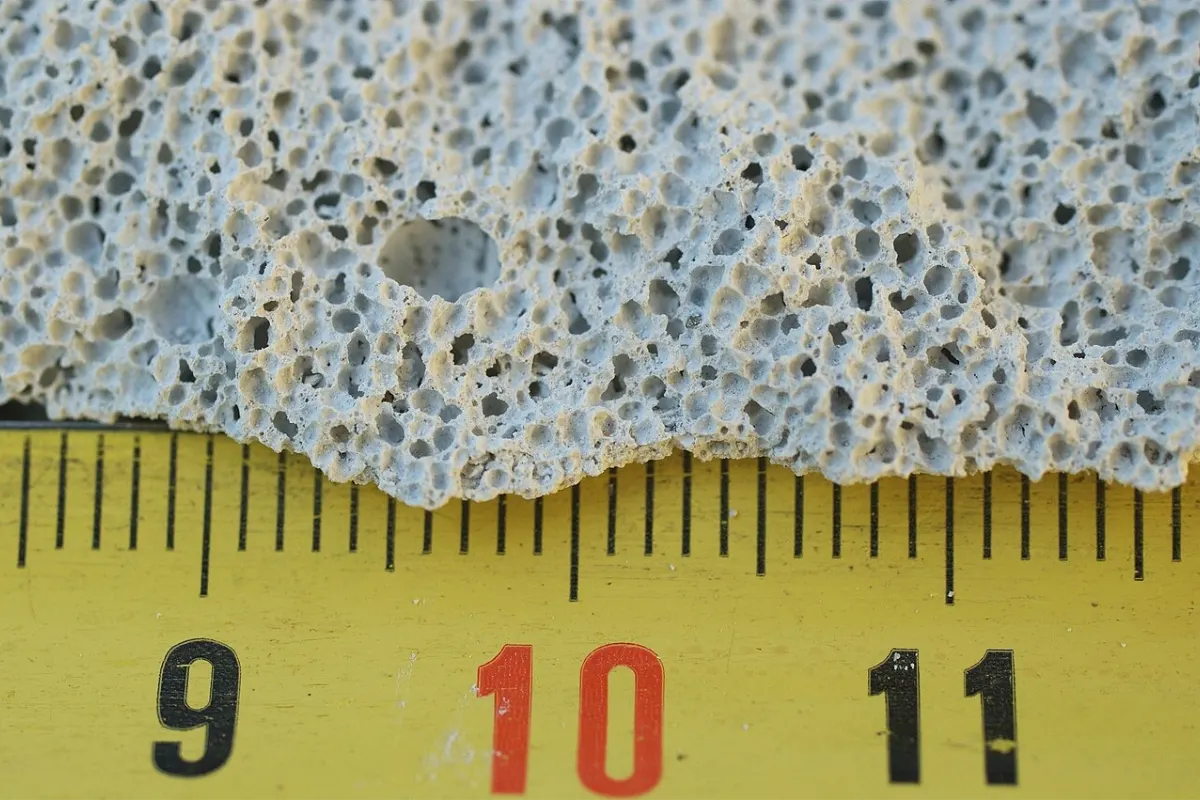
AAC, autoclaved aerated concrete, is made from cement, lime, fly ash or fine sand, gypsum and a small amount of aluminium powder. The aluminium reacts to release gas, which fills the mix with tiny bubbles and makes it rise like a cake. The cake is cut into blocks and cured under steam pressure in an autoclave. IS 2185 (Part 3) covers the blocks and IS 6041 the way they are laid.

Side by side
| Red clay brick | Fly ash brick | AAC block | |
|---|---|---|---|
| Weight of wall | Heavy | Heavy | About a third of brick |
| Unit size | Small | Small, regular | Large |
| Speed of laying | Slow | Moderate | Fast |
| Joint | Cement mortar, about 10 mm | Cement mortar, thinner when sizes are regular | Thin-bed adhesive, a few mm |
| Heat insulation | Modest, but stores heat | Modest | Good |
| Water absorption | Moderate to high | Moderate | Slow but deep |
| Plaster | Thicker, to even out irregular bricks | Thinner | Thin, as the maker specifies |
| Heavy fixings | Plugs and screws hold well | Plugs hold well | Needs anchors made for aerated concrete |
| Watch for | Varying quality between kilns | Varying quality between makers | Cracks at joints with concrete; care in wet areas |
Where each one suits
- Red clay brick: load-bearing walls in low buildings, boundary walls, walls in wet ground, and anywhere heavy fixings are common, as long as the bricks are well burnt.
- Fly ash brick: infill walls and boundary walls where a regular, smooth brick saves plaster, from a maker whose bricks pass their tests.
- AAC block: infill walls in framed buildings, especially upper floors, added floors on existing buildings, and walls where heat insulation matters, such as west-facing and top-floor walls.
- Not AAC: foundations, below ground, the bottom courses of bathroom walls, and load-bearing walls unless an engineer has designed them for it.
Why AAC walls crack, and how to stop it
AAC blocks shrink a little as they dry, and they move differently from the concrete columns and beams around them. Thick cement mortar, blocks laid wet straight from the plant, and walls packed tight against the beam above all lead to fine cracks: along the joints, where the wall meets a column, and just under the beam. Most so-called AAC problems are really problems with how the blocks were laid.
- Use blocks that have dried out after leaving the plant, stacked on pallets and kept covered on site.
- Lay them with the thin-bed adhesive the maker specifies, not with thick cement mortar.
- Tie the wall to the columns as the engineer details, and run a strip of mesh across every joint between block and concrete before plastering.
- Leave a small gap under the beam and fill it with a flexible filler, rather than ramming the top course tight.
- Provide lintels over openings and bands where the wall is long or tall.
- Plaster thinly with the plaster the maker recommends, and do not soak AAC walls the way clay brick is soaked.
Wet areas and outside walls
AAC takes up water slowly, but water that gets in travels deep and is slow to dry out. In bathrooms and kitchens, start the wall on a concrete kerb or a few courses of clay brick at the bottom, waterproof the floor and the lower part of the walls, carried higher in the shower, and fix tiles with an adhesive suited to the backing. On outside walls facing Kolkata's monsoon rain, a sound render or exterior paint system, drip grooves over openings and well-sealed window joints keep the blocks dry. Our waterproofing guide covers the systems.
Fixings: hanging things on AAC
An ordinary plastic plug and screw that holds well in brick can pull out of AAC. Use anchors made for aerated concrete, which spread the load over a larger area of the soft material. For heavy items, such as a geyser, kitchen cabinets, a large TV or an outdoor unit's bracket, plan the fixing before plastering: suitable anchors, bolts right through the wall, or a section of brick or concrete built into the wall where the item will hang. Mark these spots on the drawings, so the plumber and the carpenter know where they are.
Comfort in Kolkata's heat
AAC's air bubbles make it a much better insulator than brick, so an AAC wall lets less of the sun's heat through to the room. This helps most on west-facing walls and on top floors, and it lowers the load on air-conditioners. Brick's weight gives it a different strength: it soaks up heat slowly and gives it back later, which smooths out the day's peaks in a room that is not air-conditioned. For most homes, the roof matters more than the walls for heat, so insulation or a cool roof should come first.
The load on the frame
A lighter wall puts less load on the beams, columns and foundations, and since earthquake forces grow with a building's mass, it lowers those too. On an existing building where a floor is being added, light AAC walls are often what makes the addition possible within the capacity of the existing frame; our guide to adding a floor explains this.
The structural design assumes a wall material. Switching from AAC to clay brick during construction, to save money or because blocks are short, can put more load on the frame than it was designed for. Any change of wall material should go back to the engineer.
Delivery checks
- The ISI mark, and the maker's test certificate for the batch: density and compressive strength, and drying shrinkage for AAC.
- Sizes consistent from block to block or brick to brick, measured on a few from different parts of the load.
- The share of broken or chipped blocks within what was agreed.
- AAC blocks dry, on pallets, covered, and delivered with the adhesive the maker specifies.
- Fly ash bricks of even colour, with sharp edges, no cracks, and a clear sound when two are knocked together.
- For clay bricks, the IS 1077 checks in our brick checks guide: size, shape, sound and water absorption.
How they compare
| Red clay brick | AAC block | Fly-ash brick | |
|---|---|---|---|
| Weight | Heavy | Very light (about a third of brick) | Heavy |
| Speed | Slow (small units) | Fast (large units) | Moderate |
| Insulation | Modest | Excellent (thermal + sound) | Modest |
| Load on structure | High | Low — saves steel and concrete | High |
| Watch for | Quality varies by kiln | Needs block adhesive; care in wet areas | Consistency by maker |
The install detail that decides AAC
AAC blocks are meant to be laid with thin-bed block adhesive, not thick cement mortar, and need proper handling (they chip if thrown) and waterproofing discipline in bathrooms. Laid like ordinary bricks with sloppy mortar, they underperform — most 'AAC problems' are really install problems.
Questions people ask
Are AAC blocks strong enough for walls?
For infill walls in a framed building, yes, when they meet IS 2185 (Part 3) and are laid properly. They carry their own weight and what hangs on them; the floors are carried by the frame.
Can AAC blocks be used for load-bearing walls?
Only where an engineer has designed the building that way. In framed buildings they are used as infill, which is where their lightness pays off.
Why do cracks appear where AAC walls meet columns?
The blocks and the concrete move differently as they dry and with heat. Mesh across the joint before plaster, a flexible gap under the beam, dry blocks and the right adhesive prevent most of these cracks.
Can you hang a TV or a geyser on an AAC wall?
Yes, with anchors made for aerated concrete or through-bolts, or with a solid section built into the wall at that spot. Plan heavy fixings before plastering.
Do AAC walls keep a flat cooler?
They let less heat through than brick walls, which helps on west-facing walls and top floors and lowers air-conditioning load. The roof usually matters more, so insulate it first.
Are fly ash bricks better for the environment?
They use ash from power stations that would otherwise be dumped, and they are cured rather than fired, so they use less fuel. Their quality depends on the maker, so check the certificate and the bricks themselves.
Red flags
- AAC laid with thick cement mortar instead of block adhesive
- No ISI/BIS mark or test data from the block supplier
- AAC used in a wet area with no waterproofing plan
Pro tip
Which walling material fits your building depends on its structure, budget and climate goals. We help you choose and, through our supply arm, ensure the blocks and matched adhesive arrive ISI-marked and handled correctly.
Work it out: Brick vs AAC Block Comparator
Sources
- IS 2185 (Part 3) Concrete Masonry Units: Autoclaved Cellular (Aerated) Concrete Blocks (Bureau of Indian Standards) (checked 15 Nov 2026)
- IS 6041 Construction of Autoclaved Cellular Concrete Block Masonry, Code of Practice (Bureau of Indian Standards) (checked 15 Nov 2026)
- IS 12894 Pulverized Fuel Ash-Lime Bricks, Specification (Bureau of Indian Standards) (checked 15 Nov 2026)
- IS 1077:1992 Common Burnt Clay Building Bricks, Specification (Bureau of Indian Standards) (checked 15 Nov 2026)
Checked against these sources on the dates shown, pending our team’s sign-off.