Aging balconies — the cantilever warning signs
Balconies are usually cantilevers — slabs held up from one side only, with the critical steel at the TOP of the slab where water attacks first. That makes them the most failure-prone element of older buildings. Warning signs: cracks at the junction where balcony meets building, sagging toward the free edge, rust staining underneath, and loose railings. Any two together = keep loads off and get an assessment.
A cantilever is an outstretched arm — all the strain is at the shoulder. Rust at the shoulder joint isn't a cosmetic issue on an arm you stand on.
Most balconies are cantilevers: slabs that stick out from the building and are held from one side only, like an outstretched arm. All the strain is at the shoulder, where the balcony meets the building, and the steel that holds it up runs near the top surface, where rainwater, a cracked floor or a blocked drain reaches it first. That combination makes balconies, sunshades and cornices the most failure-prone parts of many older buildings.
A balcony rarely fails without warning. This guide explains how cantilevers work and why they fail, the warning signs, what to do at once when you see them, what an engineer checks, the ways a balcony is repaired or strengthened, the extra risks in Kolkata's older houses, and the care that keeps a balcony sound. If you see two of the warning signs together, keep people and loads off the balcony and get it assessed.
How a cantilever works
An ordinary slab rests on supports at both ends and sags in the middle, so its main steel runs near the bottom. A cantilever is supported at one end only and droops towards its free edge, so it bends the other way: the top is stretched and the bottom squeezed. Its main steel therefore runs near the top surface, and it has to be anchored well back into the floor slab or beam behind, which holds the balcony down like a counterweight.
This has three consequences. The steel that matters most is the steel nearest the floor you walk on, close to tiles, screed and water. The critical point is the root, where the balcony meets the building, which is also where floor cracks and leaks gather. And a cantilever has no second support to fall back on: if the steel at the root rusts through or pulls out, nothing else holds it up.
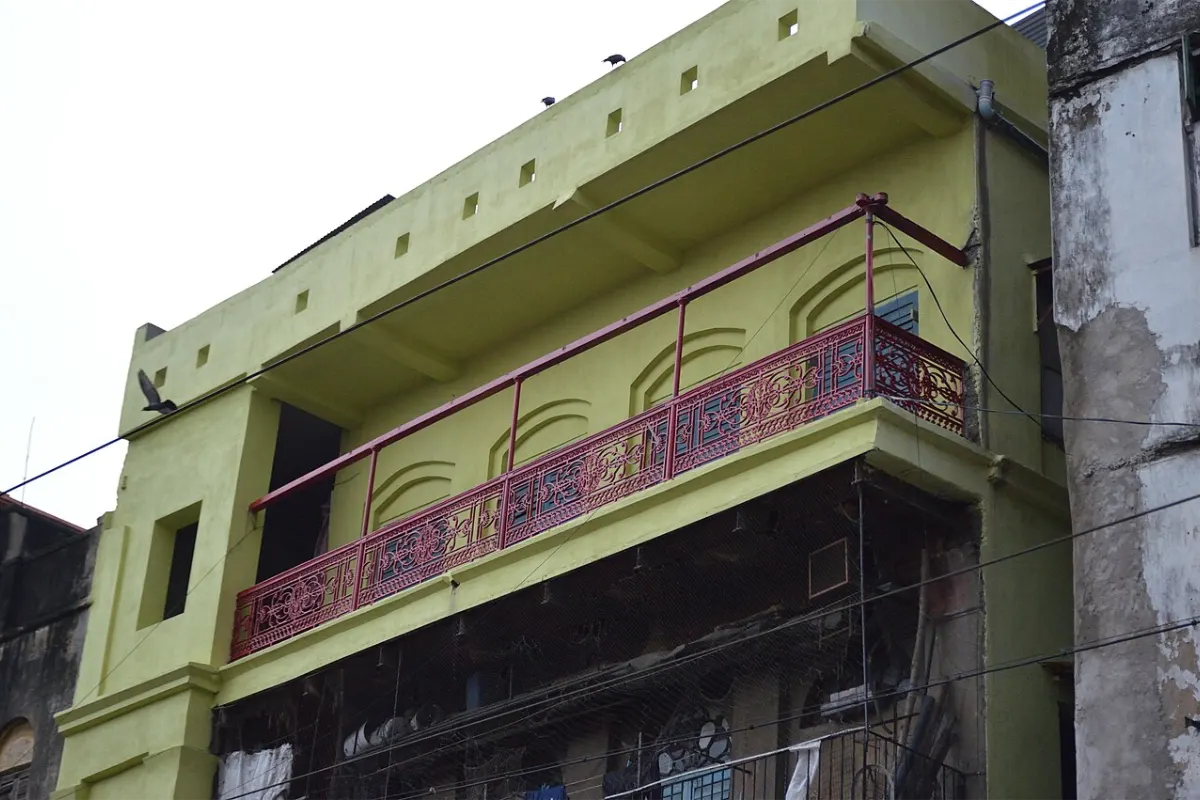

Why balconies fail
- Rusting top steel: water gets in through a cracked floor, failed waterproofing, a blocked drain or the holes for railing posts, and the bars rust at the root, unseen from below. Our spalling guide explains the process.
- Too little anchorage: bars not carried far enough back into the slab or beam behind, common in older and informal construction.
- Overload: brick enclosures, heavy planters, water tanks, stored materials or a crowd at a festival, far beyond what the balcony was designed for.
- Alterations: the floor behind cut for a duct or a stair, the supporting wall removed, or the balcony extended.
- Thin cover and weak concrete in older buildings, which let the steel rust sooner; our cover guide explains why.
- Water left standing: a balcony that slopes inwards, or towards a blocked outlet, holds water against the root.
The warning signs
Walk out onto the balcony, then look at it from below, and look at the cornices and sunshades too. A torch, a coin for tapping and a marble or a small level are all you need.
| What you see | What it can mean |
|---|---|
| A crack across the floor at the root, along the wall | The top steel stretched or rusting at the most critical line |
| The balcony sloping or sagging towards its edge | The cantilever bending more than it should, or its steel failing |
| Rust stains, cracks along the bars or spalling underneath | The steel rusting and bursting the concrete |
| Hollow sounds when the underside or edge is tapped | Concrete cover coming away and likely to fall |
| Loose railing posts in crumbling concrete | Water at the post holes, rusting posts and bars |
| Damp, salts or a leak on the ceiling of the room behind | Water reaching the root from the balcony floor |
| Cracked or lifting floor tiles near the wall | Movement at the root, or water underneath |
Any two of these together, or a sag you can see, means keep people and loads off the balcony, keep the area below clear and get an engineer's assessment soon. This is one problem where watching and waiting is not the advice.
What to do at once
- Keep people off the balcony, and lock or tie the door if children or visitors could go out.
- Remove heavy loads: planters, storage, water tanks, furniture and anything brick-built that can be safely taken off.
- Keep the area below clear: barricade the footpath, entrance or parking under it, or hang netting, in case pieces fall.
- Remove loose concrete that could fall, from a safe position, without hammering at the root.
- Call an engineer; if the sag is visible or growing, ask about temporary props at once.
- In a flat, tell the association and the neighbours below in writing.
What an engineer checks
The assessment starts with the balcony's shape and loads, then looks for the condition of the top steel at the root, which is the part that decides whether the balcony is safe. That usually means opening a small area of the floor near the wall.
- The span, thickness, slope and any sag, measured.
- A hammer survey of the underside, edge and floor.
- A cover meter scan to find the bars, and a carbonation test of the concrete.
- A small opening in the floor at the root to see the top bars, measure what is left of them and check how far they run back.
- The floor and beam behind: whether they can hold the balcony down.
- The loads on it now, and any alterations made over the years.
- The source of the water, and the condition of the waterproofing and drains.
Repair and strengthening
What follows depends on what the engineer finds. Early damage is a quick, local repair; badly rusted top steel needs strengthening, and occasionally the balcony has to be rebuilt. The Retrofit Priority Score calculator gives a first read of how urgent work on an older building is.
| Finding | Usual answer |
|---|---|
| Spalling underneath, steel only lightly rusted | Spalling repair: cut back, clean and protect the steel, rebuild with repair mortar, stop the water |
| Top steel rusted at the root, still mostly sound | Repair the top, add new steel or bonded fibre strips on the top surface as designed, then waterproof |
| Top steel badly reduced, or too short | Add support: steel brackets or posts that turn the cantilever into a supported slab, or rebuild |
| Overloaded by an enclosure or heavy storage | Remove the load; replace brick enclosures with light railings |
| Beyond repair | Prop, remove and rebuild the balcony to a new design |
Every repair ends with the water. A balcony floor that slopes outwards to a clear outlet, sealed post fixings and a drip groove under the edge keep the new steel dry.
Kolkata's older houses
Older houses in North and Central Kolkata carry their own kinds of balcony and veranda: stone or brick slabs on cast-iron brackets, floors of brick jack arches on steel joists, timber floors on beams set into the walls, and deep cornices and sunshades of brick and lime. Their weak points are where iron or steel sits in a damp wall: the joists and brackets rust at their ends, the rust bursts the brickwork round them, and the support quietly weakens. Ornamental cornices and parapets that have held for a century can come down in a single monsoon once water has got behind them.
Each monsoon, pieces of old balconies, cornices and parapets fall in the city. Under the KMC Act, the corporation can require the owners of a building in a dangerous condition to repair it or take it down (section 411), but owners do not need to wait for a notice: an early repair costs far less than a late one, and nobody has to be hurt first.
Flats and shared balconies
In a block of flats the balcony is part of the structure, so its repair is usually a matter for the association, while the use of the balcony and what stands on it is the owner's. Enclosing a balcony adds weight and covered area, and needs approval, which is often refused; our renovation approvals guide explains it. If one balcony shows warning signs, the others built at the same time, in the same way, should be checked too.
Keeping a balcony sound
- Keep the floor sloping outwards to its outlet, and keep the outlet clear, especially before the monsoon.
- Keep the floor's waterproofing in good order, and re-grout or reseal cracked tiles promptly.
- Seal the base of every railing post, and fix new grills or posts without leaving open holes in the slab.
- Keep a drip groove under the edge, so water drops off rather than running back underneath.
- Keep heavy planters, tanks and storage off cantilevers, and use light railings, not brick walls, at the edge.
- Look underneath once a year, after the monsoon, for rust, cracks and hollow patches.
The owner's balcony audit
- Junction crack where the balcony slab meets the main wall — the highest-stress line.
- A visible slope or sag toward the outer edge that wasn't there before.
- Rust stains or spalling patches on the underside — top steel corroding through.
- Heavy planters, storage or water tanks parked on an old cantilever — loads it was never designed for.
Questions people ask
How can you tell whether a balcony is unsafe?
Look for a crack across the floor where the balcony meets the wall, a slope or sag towards the edge, rust stains or spalling underneath, hollow sounds and loose railings. Any two together, or a visible sag, mean keep off it and have it assessed.
Is a crack under the balcony serious?
A hairline shrinkage crack may not be. Cracks that run along the line of the bars, with rust stains, or cracks across the floor at the root are warning signs of rusting steel and need an engineer's look.
Can a balcony be strengthened rather than rebuilt?
Usually, if the problem is found early. Repairs to the concrete, new steel or bonded strips on the top, and steel brackets or posts below can all restore it. Only badly corroded or short steel makes rebuilding the answer.
Can heavy planters damage a balcony?
Yes. Large planters full of wet soil, water tanks and brick enclosures add loads a balcony was never designed for, and keep its floor wet. Keep heavy loads near the wall, or off the balcony altogether.
Who pays for balcony repairs in a flat?
The balcony is part of the structure, so its repair is usually the association's responsibility; what is placed on it is the owner's. The by-laws decide.
When is the best time to repair a balcony?
In the dry months, well before the monsoon, so the concrete repairs and waterproofing can cure. If the warning signs are serious, prop it and keep off it at once, whatever the season.
Red flags
- Cracks at the balcony-wall junction with rust bleeding
- Sag you can see with the naked eye or a marble that rolls outward
- Railing posts loose in crumbling concrete
Pro tip
Cantilever assessment is quick, and strengthening options (propping, jacketing, steel supports) are all cheaper than the alternative. This is one guide where 'monitor it' is not the advice.
Work it out: Retrofit Priority Score
Seeing this at home? Concrete flaking off, rusty bars showing? Tick what you see and we tell you what it most likely means.
Sources
- IS 456:2000 Plain and Reinforced Concrete, Code of Practice (cover, anchorage and cantilevers) (Bureau of Indian Standards) (checked 15 Nov 2026)
- CPWD Handbook on Repair and Rehabilitation of RCC Buildings (checked 15 Nov 2026)
- IS 15988:2013 Seismic Evaluation and Strengthening of Existing Reinforced Concrete Buildings, Guidelines (Bureau of Indian Standards) (checked 15 Nov 2026)
- The Kolkata Municipal Corporation Act, 1980, section 411 (dangerous buildings) (checked 15 Nov 2026)
Checked against these sources on the dates shown, pending our team’s sign-off.