Bathroom fittings — CP, ceramic and the quality tells
Two categories decide a bathroom's longevity: CP fittings (the chrome-plated taps, mixers and showers — 'CP' means chrome-plated) and ceramic ware (the WC and washbasin). For taps, the body material matters more than the shine: solid brass lasts, cheap zinc alloy corrodes and snaps at the threads. For ceramics, glaze quality and the concealed cistern mechanism matter more than the visible shape. The failures are almost always inside, where you can't see them.
A tap is like a watch — the case can look identical, but a brass movement and a plastic movement are worlds apart in lifespan. You're buying the mechanism, not the plating.
A bathroom is fitted once and used every day for twenty years or more. The parts that decide whether it lasts are mostly the ones you cannot see: the body and cartridge inside a tap, the diverter and valves buried in the wall, the cistern mechanism behind the panel, the pipes and joints under the floor. The chrome finish and the shape of the basin are what sell a fitting in the showroom; the inside is what decides whether you are breaking tiles in year three.
This guide explains chrome-plated fittings and what makes them last, the ceramic ware and its standards, concealed fittings and why they deserve the most care, Kolkata's water pressure and why it decides which showers and mixers will work, hard water and iron, water-saving fittings, where to spend and where to save, and the checks at installation. Our Plumbing Pipe Sizer helps with the pipes, and our guide to redoing a leaking bathroom covers waterproofing.
CP fittings: what is under the chrome
CP stands for chrome-plated: taps, mixers, showers, spouts and valves finished in a thin, bright layer of chrome over nickel. The plating is only microns thick. What matters is the body under it. Good fittings have bodies of brass, a copper and zinc alloy that resists corrosion and holds a screw thread for decades. Cheap ones use zinc alloy die-castings or plastic, which corrode from the inside, crack at the threads and snap when tightened.
Weight is the simplest clue: a solid brass tap feels noticeably heavy for its size, while a zinc one feels light. The Indian standards for taps, such as IS 1795 for pillar taps and IS 8931 for fancy single taps and mixers, set the materials, the tests and the plating. Lead in the brass is a concern for drinking water; ask for fittings that the maker states are lead-free or low-lead for kitchen and basin taps.
The cartridge: why taps drip
Older taps close by pressing a rubber washer onto a seat, and the washer wears and drips. Most modern taps and mixers use a ceramic disc cartridge: two hard ceramic discs with holes that line up to open and slide apart to close. A good ceramic cartridge turns smoothly, does not drip, and lasts for years. In a single-lever mixer, the cartridge also mixes hot and cold. Cheap cartridges stiffen, leak at the lever or let hot water creep into the cold line.
Ask which cartridge the fitting uses, and whether spare cartridges are sold. A tap with a replaceable cartridge can be repaired in minutes; one without has to be replaced, which for a concealed mixer means opening the wall.
Ceramic ware: WC, basin and their standards
IS 2556 is the Indian standard for vitreous sanitary appliances. Vitreous china absorbs almost no water when well fired; a poor glaze stains, holds germs and is harder to clean. Look at the glaze in good light, run your hand inside the bowl, and check that the pan sits level without rocking.
| Item | What to look for | Standard |
|---|---|---|
| WC pan | Smooth, even glaze inside and out; a full, quiet flush; the right outlet for your drain | IS 2556 |
| Washbasin | Even glaze, no pinholes or waves; overflow and fixing points as needed | IS 2556 |
| Flushing cistern | A reliable mechanism with dual flush; spares available | IS 774 for flushing cisterns |
| Concealed cistern and frame | A named maker's frame and cistern, with an access panel to reach the valves | The maker's own system |
| Wall-hung WC | A frame rated for the load, fixed to the floor and the wall | The maker's own system |
Concealed fittings: spend here
Concealed fittings are the parts buried in the wall: the body of a concealed mixer or diverter, the stop valves, the concealed cistern, the pipes and their joints. They look tidy and are easy to clean around, but when one fails the repair means cutting tiles, opening the wall and redoing the waterproofing around it.
For anything that goes into the wall, choose a named maker's system, keep the maker's installation depth and the protective cap on until the tiles are done, and have the plumbing pressure-tested before the wall is closed. Make sure there is an access panel for a concealed cistern's valve and flush mechanism, and keep the maker's spare part numbers with the house papers.
A buried failure is a demolition job. Concealed fittings are the last place to save money in a bathroom.
Kolkata's water pressure
Many Kolkata homes are fed by gravity from a tank on the roof, filled by a pump from a sump or the municipal line. The pressure at any tap depends on how far the water level in the tank is above it: roughly one bar for every ten metres. On the floor just below the roof, a shower may have only a fraction of a bar, while the ground floor of a tall building may have plenty.
This decides which fittings will work. Thermostatic mixers, large rain showers, body jets, some concealed cisterns and sensor taps need a minimum pressure, which the maker states. Fitted on a low-pressure top floor, they give a weak trickle or do not work at all. Balanced hot and cold pressure matters too: a mixer fed by a high-pressure cold line and a low-pressure hot line from a small geyser will run cold.
The answers are to choose fittings rated for low pressure on the upper floors, raise the tank where the structure allows, or add a pressure pump for the bathrooms that need it, with the pipes sized for it. Our Water Tank Sizing tool in the Lab works out the head your tank gives.
Hard water, iron and scale
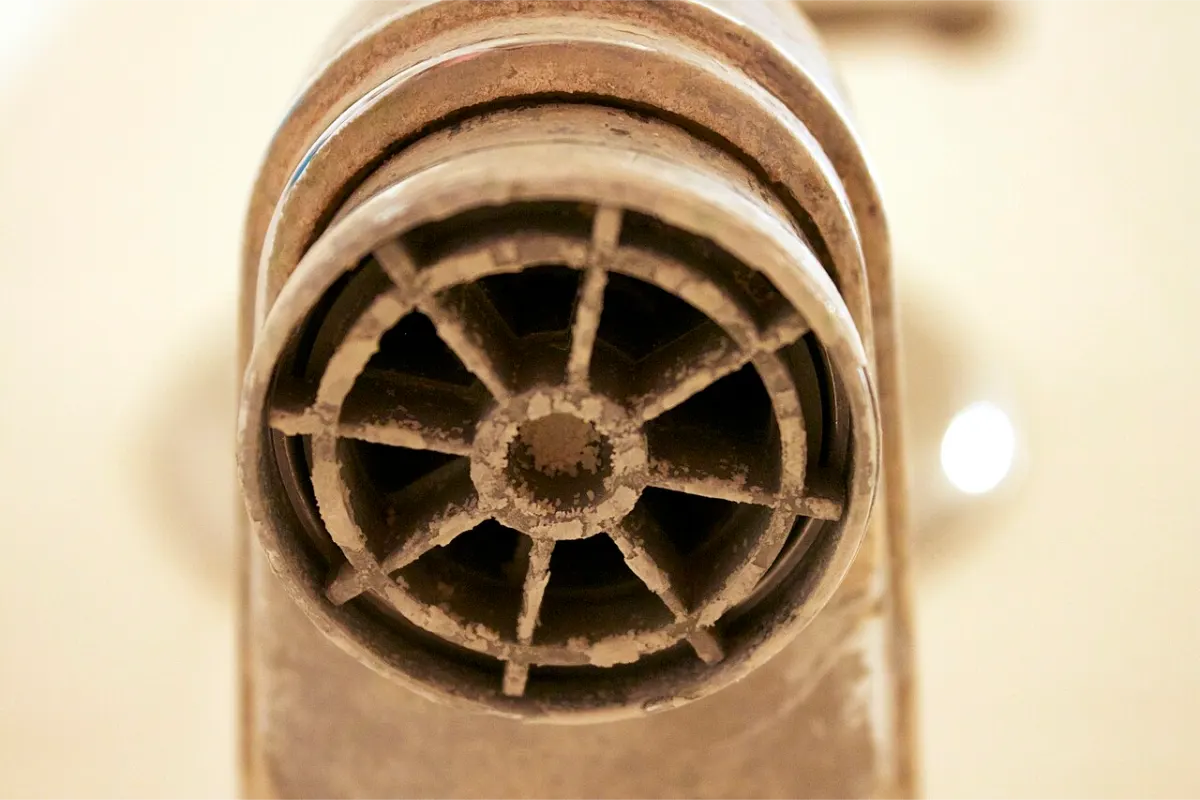
Kolkata's municipal supply, treated from the Hooghly, is generally soft. Groundwater from borewells is often hard and carries iron, which leaves white scale and red-brown stains on chrome, glass and ceramics, clogs aerators and shower heads, and shortens the life of cartridges and geysers. Where you use borewell water, pick fittings with aerators and shower heads that can be cleaned or descaled, and consider an iron removal filter after a water test; our borewell guide explains the test.

Water-saving fittings
- Dual-flush cisterns, which use a smaller flush for liquids and a full flush for solids.
- Aerators on basin and kitchen taps, which mix air into the stream so it feels fuller with less water.
- Shower heads with a stated flow rate, chosen to suit the pressure you have.
- Push or sensor taps in places where taps get left running.
- IS 17650 (Part 1) sets water-efficiency requirements for sanitary ware, and the Bureau of Indian Standards is extending such standards across plumbing products.
Where to spend and where to save
| Spend | Can save |
|---|---|
| Concealed mixers, diverters and valves | Towel rails, robe hooks, soap dishes |
| Concealed cisterns and wall-hung frames | Mirrors and cabinets |
| Tap cartridges and bodies | Decorative spouts that are easy to swap |
| Floor traps and drains with a good seal | Accessories that sit on the surface |
| Pipes and their joints | Shower curtains and screens, which can be upgraded later |
Checks at installation
- Check every fitting against the brand and model named in the quote, before it is fixed.
- Have the hot and cold pipes pressure-tested before the walls are closed and tiled.
- Set concealed bodies at the maker's depth from the finished tile face, with the cap on.
- Check that hot is on the left and cold on the right at every mixer.
- Fix the WC and basin level and firm, sealed to the floor or wall with flexible sealant, not cement.
- Open every tap and the shower at full flow and look for leaks at every joint, inside cabinets and below.
- Flush the WC several times and check the cistern refills and shuts off cleanly.
- Keep the warranty cards, the maker's manuals and the spare part numbers.
Warning signs
- Very light taps sold as brass.
- Unbranded diverters or valves for concealed work.
- A quote that says CP fittings, as per sample, with no maker or model.
- Rough, wavy or pinholed glaze on a WC or basin.
- Concealed plumbing closed up without a pressure test.
- Rain showers or thermostatic mixers planned on a low-pressure top floor with no word about pressure.
What actually lasts
- Taps/mixers: ask for a solid-brass body with a ceramic-disc cartridge — these don't drip and don't seize. Heft is a clue; a suspiciously light tap is often zinc alloy.
- WC & basin: check the glaze is smooth and even (rough glaze stains and harbours germs); prefer a reputable brand's concealed cistern, since replacing a buried one means breaking the wall.
- Concealed plumbing: any diverter or valve going inside the wall must be a quality brand — a buried failure is a demolition job.
Where to spend and where to save
Spend on anything concealed or mechanical (cartridges, diverters, concealed cisterns) — replacing these means breaking tiles and walls. You can economise on purely decorative surface pieces that are easy to swap later.
Questions people ask
How can you tell a brass tap from a zinc one?
Weight is the first clue: brass is much heavier for its size. Ask the maker for the body material and standard. Zinc bodies corrode from the inside and crack at the threads.
Why does a rain shower give only a trickle?
Usually because the water pressure is too low. Many Kolkata homes are fed by gravity from the roof tank, so upper floors get little pressure. Choose a low-pressure shower, or add a pressure pump.
Is a concealed cistern worth it?
It looks clean and saves space, but it is buried in the wall. Choose a named maker's system with an access panel and spare parts, and have it installed to the maker's instructions.
Why do taps drip?
Older taps drip when their rubber washers wear. Taps with ceramic disc cartridges rarely drip; if one does, the cartridge can usually be replaced.
What causes white scale and red stains on fittings?
Hard water and iron, common in borewell water. Clean aerators and shower heads regularly, and consider an iron removal filter after a water test.
Should you buy the fittings yourself?
You can, but give the plumber the maker's installation instructions, especially for concealed fittings. We can specify the fittings, check them against the quote and supervise the installation.
Red flags
- Very lightweight 'brass' taps (likely zinc alloy)
- Unbranded diverters or valves buried inside the wall
- Rough or uneven glaze on the WC or basin
Pro tip
The fittings you can't see are the ones that cause wall-breaking repairs. Our interiors team specifies quality where it's concealed and lets you economise where it's cosmetic — the reverse of how corners usually get cut.
Work it out: Plumbing Pipe Sizer
Sources
- IS 2556 Vitreous Sanitary Appliances (Vitreous China), Specification (Bureau of Indian Standards) (checked 15 Nov 2026)
- IS 1795 Pillar Taps, and IS 8931 Copper Alloy Fancy Single Taps, Combination Tap Assembly and Stop Valves (Bureau of Indian Standards) (checked 15 Nov 2026)
- IS 17650 (Part 1) Water Efficient Plumbing Products, Sanitary Ware (Bureau of Indian Standards) (checked 15 Nov 2026)
- National Building Code of India 2016, Part 9 Plumbing Services (Bureau of Indian Standards) (withdrawn by BIS on 30 April 2026; replaced by the National Building Construction Standards 2026, SP 7:2026) (checked 15 Nov 2026)
Checked against these sources on the dates shown, pending our team’s sign-off.