OPC 43, OPC 53 or PPC — which cement for which job
The two you'll meet most: OPC (Ordinary Portland Cement, IS 269) in 43 and 53 grade, where the number is 28-day strength in MPa; and PPC (Portland Pozzolana Cement, IS 1489) which blends OPC with fly ash. Stronger isn't automatically better: OPC 53 gains strength fast and generates more heat — good for structural concrete, but prone to surface cracking in plaster and slabs unless cured well. PPC gains strength slower but ends up more durable, and is often the better all-rounder for homes in a wet, coastal climate.
It's like flour. Strong bread flour (OPC 53) is right for a structural loaf but makes cakes tough. All-purpose flour (PPC) is more forgiving across everyday jobs. Using the 'strongest' one everywhere isn't skill — it's a misunderstanding of what each is for.
Walk into any hardware shop in Kolkata and you will see three or four kinds of cement, each with a number on the bag and a brand promise beside it. The kind matters less than most people think, and more than some suppliers admit. Each type has jobs it suits well and a few it suits badly. And for almost every job, the cement's freshness, the mix it goes into and the curing afterwards matter more than which type it is.
This guide explains the types you will meet and the standards behind them, what the grade number really means, how the types differ in early strength, heat and durability, which cement suits which job, slag cement in eastern India, the common myths, and buying and storing cement in Kolkata's climate. Our cement freshness guide covers storage and the delivery checks in detail, and our Concrete Grade Selector helps choose a concrete grade.
The types you will meet
IS 269:2015 brought all three OPC grades into one standard. The blended cements, PPC, PSC and composite cement, replace part of the clinker with materials that would otherwise be waste, fly ash from power stations and slag from steel plants, which also react over time to make the hardened cement denser.
| Type | Standard | What it is |
|---|---|---|
| Ordinary Portland cement (OPC), grades 33, 43 and 53 | IS 269:2015 | Clinker ground with a little gypsum; the basic cement |
| Portland pozzolana cement (PPC) | IS 1489 (Part 1):2015 | OPC blended with fly ash, typically 15 to 35 per cent |
| Portland slag cement (PSC) | IS 455:2015 | OPC blended with ground slag from steel plants, typically 25 to 70 per cent |
| Composite cement | IS 16415 | OPC blended with both fly ash and slag |
| Sulphate-resisting cement | Its own standard | For soils and groundwater with high sulphates, as a soil report may advise |
| White cement | IS 8042 | For finishes, putty and decorative work; not for structural concrete |
What the grade number means
The number on OPC, 33, 43 or 53, is the minimum compressive strength in megapascals that the cement reaches at 28 days in a standard laboratory test on cement mortar cubes. It is a measure of the cement, not of your concrete. Concrete grades, such as M20 or M25, come from the whole mix: the cement content, the water, the sand and stone, and the compaction and curing. Using 53 grade cement does not make M53 concrete, and a well-designed M25 mix can be made with any of these cements.
PPC and PSC are not sold by grade in the same way; their standards set a minimum 28-day strength, and good brands usually test well above it. Our concrete grades guide explains what the M numbers mean.
Early strength, heat and durability
OPC 53 gains strength fast. That is useful where shuttering has to come off quickly or precast pieces need early handling. It also gives off more heat as it sets, and with poor curing it is more prone to cracks: shrinkage cracks in slabs and plaster, and cracking from heat inside thick members.
PPC and PSC gain strength more slowly in the first weeks and keep gaining for longer, often ending as strong as OPC or stronger. They give off less heat, and the fly ash or slag fills the pores in the hardened paste, which makes the concrete less permeable and better at resisting chlorides and sulphates. For a building in a wet climate, in damp ground or near salt, that durability is valuable.
IS 456 asks for exposed concrete to be cured for at least 7 days with OPC, and at least 10 days where blended cements or mineral admixtures are used, with longer curing in hot, dry weather. Shuttering striking times in IS 456 are given for OPC; slower cements need longer.
Which cement for which job
The engineer's specification decides for structural work. The table is a guide to what you will usually see, not a rule.
| Job | Usual choice | Why |
|---|---|---|
| Footings, columns, beams, slabs | OPC 43 or 53, or PPC or PSC, as the engineer specifies | All can make the required grade; blended cements add durability where speed is not critical |
| Plaster | PPC or PSC | Less heat and slower setting mean fewer shrinkage cracks |
| Brickwork and blockwork mortar | PPC, PSC or OPC 43 | Workable and less prone to cracking |
| Floor beds and lean concrete | PPC or PSC | Strength needs are modest; durability helps |
| Foundations and tanks in wet ground, basements | PPC or PSC, in a designed mix | Lower permeability, better resistance to water and salts |
| Precast work or urgent shuttering removal | OPC 53 | Fast early strength |
| Tile fixing and grouting | The maker's tile adhesive and grout | Made for the job; site cement paste is a poor substitute |
Slag cement in eastern India
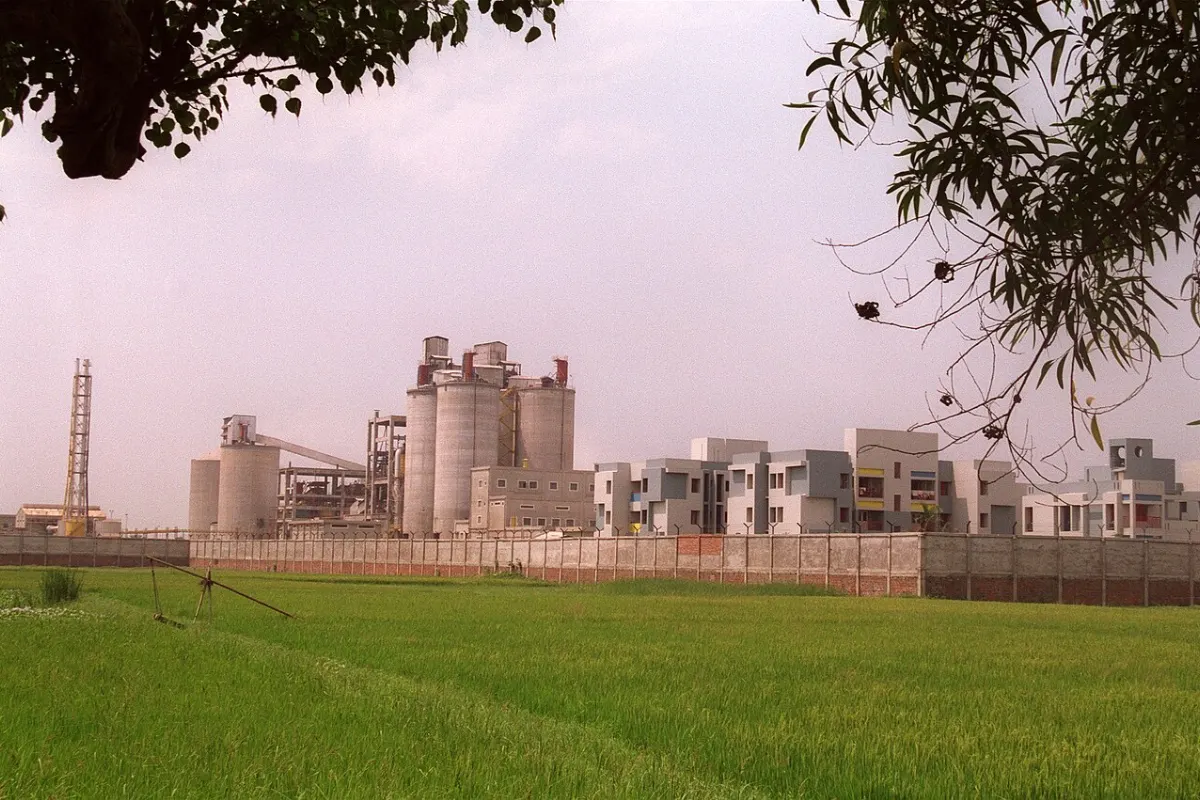
Portland slag cement is especially common in eastern India, because the region's steel plants produce large amounts of slag. In West Bengal it sits on shop shelves beside OPC and PPC. It behaves much like PPC: slower early strength, low heat, and good long-term durability, particularly against chlorides and sulphates. It is usually lighter in colour. Like every blended cement, it rewards careful curing, and suffers more than OPC if curing is skimped.

Myths and sales talk
- 53 grade is always better: higher early strength is not the same as better concrete; for plaster and masonry it is often worse.
- PPC is weaker: it gains strength more slowly at first, not less in the end; the standards set minimum strengths for both.
- More cement makes stronger concrete: beyond what the mix design needs, extra cement mainly adds heat, shrinkage and cracks.
- Darker cement is stronger: colour depends on the raw materials and the blend, not the strength.
- One cement for everything: different parts of a building have different needs, and a good specification can name two types.
- Mixing types in one batch is fine: avoid mixing different cement types within one pour; different pours can use different types if the engineer agrees.
Buying and storing
- Look for the BIS standard mark with the licence number, the type and grade, and the week and year of manufacture printed on every bag.
- Check that bags are sealed, the cement is free-flowing powder with no hard lumps, and the weight is right.
- Prefer cement made within the last few weeks, and use it within about three months of manufacture.
- Store on a raised, dry platform, away from walls, covered, in stacks of limited height, as IS 4082 describes.
- Use the oldest stock first, and do not store cement on site through a monsoon longer than you must.
- Keep different types and grades in separate stacks, clearly marked, so the right one goes into the right job.

In Kolkata's climate
Kolkata's humidity is hard on cement in bags. Moisture from the air slowly sets the cement into lumps, starting at the outside of the bag, which is why storage and freshness matter so much here; our cement freshness guide has the checks. In the summer heat, concrete and mortar set faster and lose water quickly, so pouring in the cooler hours and starting curing early pay off.
The city's wet ground, high water table and humid air also make durability a priority. Many of the cracks and falling plaster in older Kolkata buildings come from rusted steel, where water and air reached the bars through permeable or thin concrete. Blended cements, used in a well-designed mix with enough cover and proper curing, help new buildings resist this. Our spalling guide explains how it happens.
Rough guide to use
| Cement | Best for | Note |
|---|---|---|
| OPC 53 (IS 269) | Structural RCC — columns, beams, footings | High early strength and heat; cure diligently |
| OPC 43 (IS 269) | General RCC and masonry | Balanced, widely used |
| PPC (IS 1489) | Plaster, masonry, mass concrete, wet climates | Slower set, higher long-term durability |
The rules that matter more than the grade
- Freshness beats grade — cement over about 3 months old or lumpy is a bigger problem than 43 vs 53 (see the cement-freshness guide).
- Curing matters more with OPC 53 — its speed is wasted and its cracking risk rises without disciplined watering.
- Match cement to job — let your engineer specify; don't let a supplier push whatever's in stock.
Questions people ask
Is OPC 53 better than OPC 43 for a house?
Not automatically. OPC 53 gains strength faster, which helps some structural work, but it gives off more heat and cracks more easily in plaster and slabs if curing is poor. The concrete's grade comes from the mix, not the cement's number.
Can PPC be used for columns, beams and slabs?
Yes. IS 456 allows it for reinforced concrete, and it gives durable concrete. It needs longer curing, at least 10 days, and the shuttering stays on longer than with OPC.
Why does PPC need longer curing?
The fly ash in it reacts more slowly than clinker, so the concrete needs water for longer to reach its strength and density. IS 456 asks for at least 10 days of curing for blended cements, against 7 for OPC.
What does the date on a cement bag mean?
It is the week and year the cement was made. Fresher is better: use cement within about three months of that date, and sooner in the humid months.
Is slag cement good for building?
Yes. Portland slag cement, made to IS 455, is common in eastern India and gives durable concrete with low heat. Like PPC, it gains strength more slowly early on and needs careful curing.
Can different cement types be mixed?
Avoid mixing types within one batch or pour. Different parts of the building can use different types where the engineer specifies them.
Red flags
- OPC 53 used for plaster and then cracking as it dries
- 'Strongest cement' offered as a blanket upgrade for everything
- No ISI mark, or a manufacture date over 3 months old
Pro tip
Cement choice is a small line item that quietly affects durability and cracking. We specify the right type per element and verify freshness and grade at delivery on every Delta site.
Work it out: Concrete Grade Selector
Sources
- IS 269:2015 Ordinary Portland Cement, Specification (Bureau of Indian Standards) (checked 15 Nov 2026)
- IS 1489 (Part 1):2015 Portland Pozzolana Cement, and IS 455:2015 Portland Slag Cement, Specifications (Bureau of Indian Standards) (checked 15 Nov 2026)
- IS 456:2000 Plain and Reinforced Concrete, Code of Practice (checked 15 Nov 2026)
- IS 4082 Stacking and Storage of Construction Materials and Components at Site (Bureau of Indian Standards) (checked 15 Nov 2026)
Checked against these sources on the dates shown, pending our team’s sign-off.