Toughened, laminated or DGU — choosing glass that fails safely
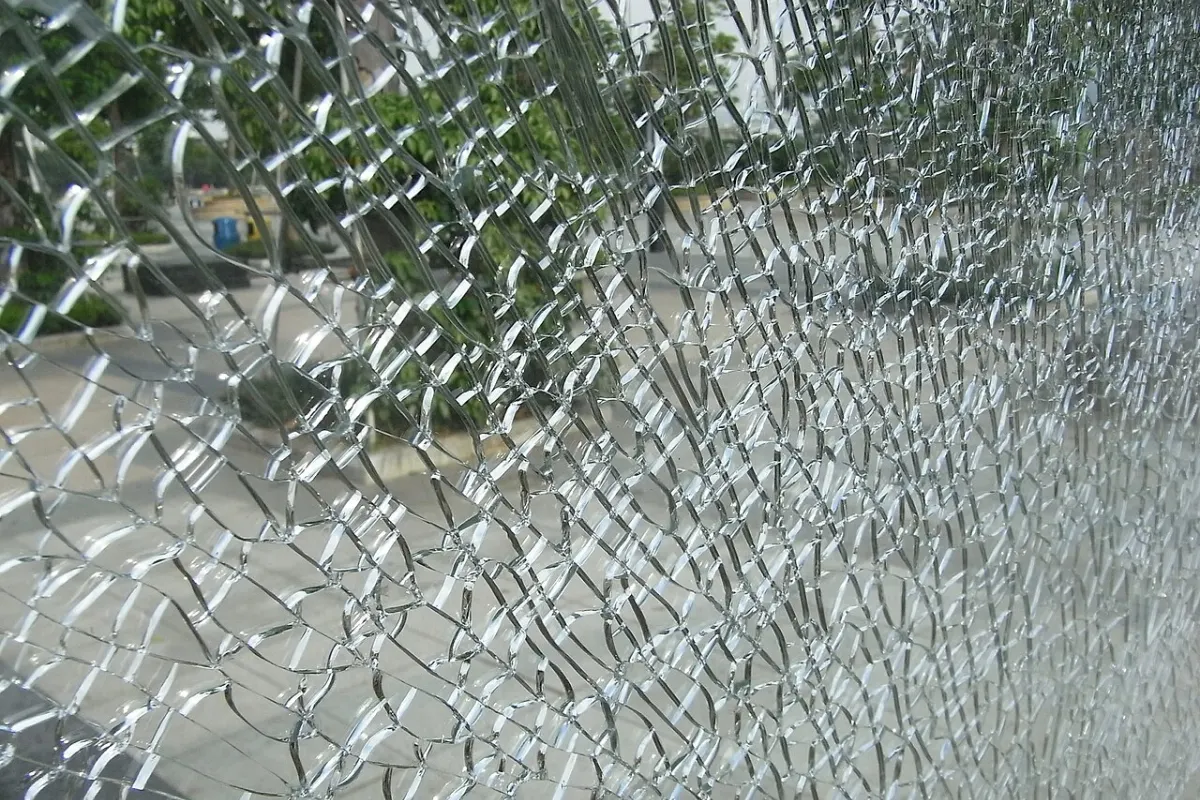
Ordinary (annealed) glass breaks into daggers. Toughened is 4–5× stronger and crumbles into pellets — use it for doors, showers, railings' infill. Laminated holds its pieces on a plastic interlayer — use it overhead and where fall-through must be impossible. DGU (double glazing) is two panes with a sealed gap for heat and sound, not strength.
Toughened glass is a soldier that dies cleanly; laminated is one that stays standing wounded. Overhead and guarding a drop, you want the one that stays standing.
Glass is everywhere in a modern home: windows, sliding doors, shower screens, kitchen shutters, balcony railings, skylights, tabletops and mirrors. Most of the time it is just a clear surface. The moment it breaks, the kind of glass decides what happens next: daggers on the floor, a shower of small pellets, or a cracked pane that stays in its frame and keeps someone from falling through.
This guide explains the main kinds of glass and how each one breaks, where each belongs, glass that guards a drop, overhead glass, glass for heat and noise, Kolkata's heat and glare, how to recognise what you are buying, cutting and fitting, and the delivery checks. Our Window Heat Gain Checker shows how much sun a window lets in.
The main kinds
IS 2553 (Part 1) covers safety glass, toughened and laminated, and IS 16231, the Indian code for the use of glass in buildings, sets out where safety glass must be used and how glass is selected for wind and other loads.
| Glass | How it is made | How it breaks |
|---|---|---|
| Annealed (ordinary float) | Cooled slowly after forming | Into large, sharp pieces |
| Heat-strengthened | Heated and cooled faster than annealed | Into larger pieces than toughened; stronger than annealed |
| Toughened (tempered) | Heated and cooled very fast, so the surface is in compression | Into small, blunt pellets; several times stronger than annealed |
| Laminated | Two or more panes bonded with a plastic interlayer | Cracks but the pieces stay stuck to the interlayer |
| Toughened laminated | Toughened panes laminated together | Pellets held in the interlayer |
| Insulating glass unit (double glazing) | Two panes with a sealed gap between them | Each pane breaks as its own kind |

Where each belongs
- Shower screens, glass doors, low windows and panels near the floor: toughened, because people can walk or fall into them.
- Kitchen shutters and tabletops: toughened.
- Balcony and stair guarding, where someone could fall: laminated, or toughened laminated, held in a designed system.
- Skylights, canopies and any glass overhead: laminated, so broken pieces stay up.
- Bedroom and living room windows on busy roads or facing the west sun: an insulating unit, possibly with a coating or laminated pane.
- Ordinary windows higher up, away from where people stand: annealed glass of the right thickness can be acceptable where the code allows.
- Mirrors in bathrooms and wardrobes: safety-backed mirror or a film, so it holds together if broken.
Glass that guards a drop
A glass railing on a balcony, a terrace or a staircase is holding people back from a fall. It has to carry the push of people leaning or falling against it, as the loads code IS 875 (Part 2) sets for barriers, and it must not fall out if one pane breaks. Glass held between posts as infill is one system; frameless glass fixed only at its base, standing up on its own, is another, and much more demanding.
Frameless guarding should use laminated glass, often toughened laminated, in a base shoe or clamps designed for it, with a handrail across the top in many designs so the barrier still stands if a pane breaks. It needs an engineer's design and the maker's tested system. Plain toughened glass in such a barrier can shatter completely and leave a gap.
Overhead glass
Toughened glass is strong, but when it does break, every piece falls. Small toughened pellets falling from a canopy or skylight several metres up can still injure people below. Overhead glass, such as skylights, canopies, glass roofs and glass floors, should be laminated, so that a broken pane stays in place until it is replaced. Toughened glass can also break, rarely, by itself, from tiny nickel sulphide inclusions in the glass; laminating it holds the pieces when that happens.
Glass for heat and noise
Glass lets in sun as well as light. A large west-facing window in Kolkata heats a room through the afternoon and loads the air-conditioner. Tinted and reflective glass cut the heat but also cut light and change how the view looks. Low-emissivity coatings and solar control glass let in more light for the heat they keep out. An insulating unit, two panes with a sealed gap, slows heat moving through the glass and cuts traffic noise, especially with one laminated pane.
The quality of an insulating unit depends on its spacer and its seals. A poorly sealed unit lets damp in, and the inside of the panes fogs within a few years, which cannot be cleaned. Ask for the maker, the spacer and the warranty against fogging. Shade still works best: sunshades, deep reveals and external blinds stop the sun before it reaches the glass. Our Window Heat Gain Checker compares options for your window.
Recognising what you are buying
- Toughened glass carries a permanent etched or fired mark in a corner, with the maker and standard; no mark, assume it is not toughened.
- Laminated glass shows its interlayer at the edge as a thin line between the panes, and its thickness is the panes plus the interlayer.
- Ask for the thickness and check it with a gauge.
- Look at the edges: polished or ground smooth, not just seamed, where they are exposed.
- Toughened glass seen through polarised sunglasses often shows faint patterns from the toughening process.
Cutting and fitting
Toughened glass cannot be cut, drilled or edged after it is toughened; it shatters. Every hole, notch and edge has to be finished before it goes into the furnace. A supplier who offers to trim a toughened panel on site is telling you it is not toughened. Measure carefully, from the finished openings, and agree the drawings with the fabricator before the glass is made.
Glass must sit in its frame with setting blocks and the clearances the code and the maker give, so that it is not pinched by the frame as the building and the frame move with heat. Glass touching metal or concrete directly is a common cause of breakage.
Delivery and installation checks
- Check the mark on every toughened or laminated pane against the order.
- Check thickness with a gauge, and size against the drawing.
- Check for chips at the edges and corners, which weaken toughened glass.
- Check insulating units for the maker's label and any fogging or dust between the panes.
- Check that the glass sits on setting blocks with clearance, and the seals or gaskets are continuous.
- For railings and overhead glass, check the system matches the engineer's or the maker's design.
Where each belongs
- Shower cubicles, glass doors, tabletops: toughened (look for the permanent etched stamp in a corner — no stamp, assume ordinary).
- Skylights, canopies, staircase and balcony guarding: laminated (or toughened-laminated) — pellets from plain toughened still fall on heads.
- West-facing bedrooms near traffic: DGU cuts both heat and noise; the spacer and sealing quality decide whether it fogs internally in 3 years.
- Railings: check the design — 12mm toughened as infill within posts is different from frameless structural glass, which needs laminated and an engineer.
Delivery checks
Toughening cannot be done after cutting — every hole and edge must be finalised before the furnace. A supplier offering to 'cut it slightly on site' is telling you the glass is not toughened. Check the stamp, the thickness with a gauge, and edges polished, not just seamed.
Questions people ask
Is toughened glass safe?
It is several times stronger than ordinary glass and breaks into small, blunt pieces, so it is the right choice for doors, showers and low panels. It is not the right choice overhead or for guarding a drop on its own.
What glass should a balcony railing use?
Laminated or toughened laminated glass in a designed system, so a broken pane stays in place. Frameless railings need an engineer's design.
Can toughened glass be cut on site?
No. It must be cut, drilled and edged before toughening. Cutting it afterwards shatters it.
Does double glazing keep a room cool?
It slows heat moving through the glass and cuts noise. For sun on a west window, coatings and outside shade do more against the heat.
Why does double glazing fog inside?
The seal has failed and damp has got into the gap. It cannot be cleaned; the unit needs replacing. Good spacers and seals prevent it.
How can you tell toughened glass from ordinary glass?
Look for the permanent mark in a corner. If there is none, assume it is not toughened.
Red flags
- No etched toughening stamp on 'toughened' panels
- Plain toughened glass used overhead
- Frameless railing glass with no lamination and no engineer sign-off
Pro tip
Any structural glass — floors, frameless railings, large facades — is a specialist design item; ask for the glass engineer's calculation sheet, not the fabricator's assurance.
Work it out: Window Heat Gain Checker
Sources
- IS 16231 Use of Glass in Buildings, Code of Practice (Bureau of Indian Standards) (checked 15 Nov 2026)
- IS 2553 (Part 1) Safety Glass, Specification (Bureau of Indian Standards) (checked 15 Nov 2026)
- IS 875 (Part 2) Imposed Loads (Bureau of Indian Standards) (checked 15 Nov 2026)
Checked against these sources on the dates shown, pending our team’s sign-off.