Building through the monsoon — what pauses, what doesn't
Rain doesn't stop a well-run site; it re-sequences it. Concrete pours are scheduled around heavy spells (rain dilutes fresh concrete and washes cement paste out), excavations need dewatering and shoring, and external plaster waits for dry walls. Meanwhile interior trades — wiring, ceilings, carpentry — speed up. A good contractor shows you a monsoon-adjusted schedule, not a stopped site.
Monsoon planning is airline scheduling in bad weather — flights aren't cancelled wholesale, they're re-routed. If your site simply 'shuts for the rains', nobody was really scheduling it.
In Kolkata, the monsoon is a third of the building year. A site that simply stops for the rains loses four months; a site that ignores them pours weak concrete, floods its foundation pits and plasters walls that will not hold. A well-run site does neither. It re-sequences the work: the jobs that need dry weather are done before June or after the rains, and the work that can go on indoors moves up the schedule.
This guide explains the city's wet season, what genuinely has to wait, what carries on and what speeds up, how concrete, excavations and materials are handled in the rain, the safety risks that come with the season, and how to read a monsoon-adjusted schedule. The Season Planner in our Lab shows how the months line up for the stages of your own build.
Kolkata's wet season
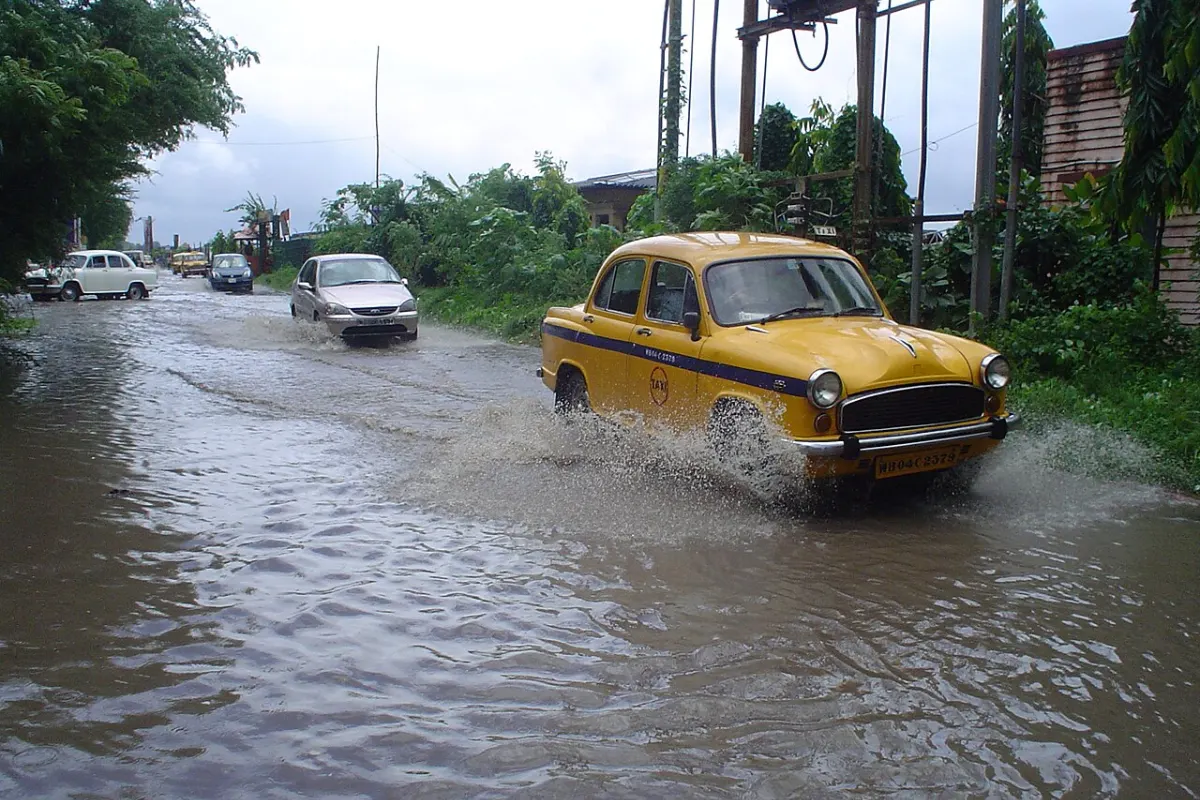
The south-west monsoon usually reaches Kolkata around the second week of June and withdraws in October, and most of the year's rain falls between June and September. It does not rain all the time: the season comes in spells, with heavy downpours that can drop a great deal of rain in a few hours, followed by breaks of sun. Low-lying parts of the city and the suburbs waterlog after heavy spells, and the water table rises close to the surface.
The weeks either side matter too. From March to May, nor'westers, the kalbaishakhi storms, bring sudden squalls, lightning and short, heavy rain, usually in the afternoon. Cyclones from the Bay of Bengal can arrive in May and again in October and November. A site that is ready for the monsoon is also ready for these: sheets tied down, scaffolds braced, loose materials secured.

What genuinely has to wait
A few kinds of work should not be done in heavy rain, or need a dry surface to work at all. These are the jobs a good schedule finishes before June or holds until the rains ease.
- Concrete pours during active heavy rain: rain on fresh concrete dilutes the surface and washes out the cement paste.
- External plaster and paint: they need a dry wall to bond and dry weather to cure.
- Roof and terrace waterproofing: most systems need a dry, clean surface, and a terrace left half-done floods the floor below.
- Deep excavation without pumps and shoring: waterlogged pits slump and collapse.
- Anti-termite treatment of the soil: the chemical washes away in standing water, so it waits for a dry spell.
- External tiling and stone cladding on walls that are soaked.
What carries on, and what speeds up
Once the building is roofed, the monsoon is a good time for everything that happens under cover. On our own sites the months of rain are often the busiest indoors.
- Electrical conduits and wiring, plumbing and drainage inside the building.
- Internal brickwork and internal plaster on covered floors, with good ventilation so it can dry.
- Floor and wall tiling inside.
- False ceilings, carpentry, doors and windows, and modular units.
- Pressure tests of the plumbing and the electrical tests before walls are closed.
- The paperwork: approvals, drawings, the bill of quantities, procurement and orders for the dry months ahead.
Concrete in the rain
Concrete can be poured in the monsoon, with planning. The aim is to avoid pouring into heavy rain, to protect the fresh surface for its first hours, and to keep the mix right when the sand and stone are wet.
- Check the forecast from the India Meteorological Department before fixing the pour, and keep a day in hand.
- Keep plastic sheets or tarpaulins ready on site, enough to cover the whole pour, with weights to hold them down.
- Correct the mix for wet sand: water carried in the sand counts as mixing water, so less is added. Our W/C Ratio Visualizer shows why it matters.
- If heavy rain starts mid-pour, stop at a construction joint in the place the engineer has marked, cover the concrete and do not resume until it eases.
- Do not finish the surface with rainwater lying on it; let it run off or remove it first.
- Once the concrete has set, gentle rain helps curing; heavy rain in the first hours does damage.
Light rain on concrete that has already set is not a problem: it is free curing. The danger is heavy rain in the first few hours, which leaves a weak, dusty surface that may need grinding or a topping later.
Excavations, foundations and water
Kolkata's water table is high even in the dry months, and in the monsoon it can rise to within a metre or two of the ground. Foundation pits fill with water overnight, the soft clay at their sides loses strength, and the soil under the neighbouring buildings can be disturbed.
Plan the foundations for the dry season where you can. If they must be dug in the monsoon, the site needs pumps and a sump to keep the pits dry, shoring for any trench deeper than about 1.5 m, as the excavation safety code IS 3764 advises, excavated soil kept back from the edges, and the lean concrete bed cast as soon as each pit is dug, so the bottom is not left open to soften. Watch the walls of the buildings next door for new cracks, and stop if any appear.
Materials in the wet season
Much of the damage the monsoon does on a site happens to materials, not to the building. A few habits keep them in good condition.
- Cement: on a raised platform or pallets, away from the walls, covered, and used first in, first out. Our Cement Bag Storage Planner works out the space.
- Sand: covered, with its moisture allowed for in the mix; wet sand also bulks, so measure by weight or correct the volume.
- Steel: on supports off the ground and covered. A light, even rust is normal; flaky scale is not.
- Bricks: stacked on raised, drained ground and covered, so they do not stand in water and pick up salts.
- Timber, plywood, boards and tiles: in a dry, covered store, off the floor.
- Plan deliveries for the dry spells, and do not store more than the next few weeks need.
Safety in the rains
The monsoon adds its own hazards to a building site, and the people working on it face them first. Our site safety guide covers the basics; these are the ones the season adds.
- Slippery surfaces: clear water and mud from walkways, ladders and scaffold boards.
- Electricity: cables off the ground and out of water, every circuit through a 30 mA residual current device, no taped joints.
- Wind: tie down sheets and nets and brace scaffolds before the nor'westers and on any cyclone warning.
- Lightning: stop work at height and on open roofs during thunderstorms.
- Mosquitoes: dengue peaks in these months. Empty and refill curing ponds, drums and tanks at least once a week, as the national vector control programme advises, and keep containers covered.
- Open pits and trenches: barricade them and light them at night; they fill with water and are hard to see.
A monsoon-adjusted schedule
The difference between a site that loses the monsoon and one that uses it is the schedule. A good one is planned around the season from the first week, not adjusted when the first storm arrives.
- Aim to have the foundations done and the structure out of the ground before June.
- Plan to have the roof cast and the building closed in, at least temporarily waterproofed, by the time the rains are steady.
- Move internal work, services and finishes into the wet months, and external plaster and paint into the dry months before or after.
- Allow for lost days in July and August; a schedule that counts every monsoon day as a working day is not a real schedule.
- Review the next two weeks against the forecast every week, and rearrange pours and deliveries around the heavy spells.
- Keep the critical path indoors when the sky says so; our guide to reading a schedule explains the critical path.
What genuinely must wait
- Structural pours during active heavy rain — fresh surfaces get washed out and diluted.
- External plaster and paint — they need dry surfaces to bond and cure.
- Deep excavation without dewatering and shoring — waterlogged pits collapse.
What speeds up instead
- Interior electrical, plumbing and conduiting.
- False ceilings, carpentry and modular work in covered areas.
- Procurement and approvals — the paperwork months.
Questions people ask
Should you start building just before the monsoon?
Starting the foundations in May risks open pits in June. Where you can, dig and cast the foundations in the dry months, or plan for pumps and shoring from the start. The Season Planner in our Lab shows the best start for each stage.
Can concrete be poured in the rain?
In light rain, with sheets ready and the surface protected, yes. In heavy rain, no: wait for a break, or stop at a planned construction joint and cover the concrete.
Is rain good for curing?
Gentle rain on concrete that has already set helps keep it wet. Heavy rain in the first few hours after the pour damages the surface.
Should the roof be waterproofed before the monsoon?
Ideally, yes. If the full system cannot be finished in time, protect the roof temporarily so that water does not stand on it or soak into the floor below.
Does plastering have to wait until after the rains?
External plaster, yes, or before them. Internal plaster can go on in the monsoon on covered floors, with ventilation so it can dry.
What does a monsoon-ready site look like?
Sheets on hand for every pour, cement on raised platforms under cover, cables off the ground, pumps ready for the pits, scaffolds braced, no standing water in drums, and a schedule with the indoor work lined up.
Red flags
- Freshly cast slab left exposed to a downpour with no covering
- Cement bags stored on the floor instead of raised, covered pallets
- A schedule that treats June–September as free delay with no plan
Pro tip
Our schedules are monsoon-adjusted from day one — the critical path moves indoors when the sky says so, and the handover date is protected.
Try it in our Lab: Season Planner
Sources
- India Meteorological Department: monsoon onset and withdrawal, Regional Meteorological Centre Kolkata (checked 15 Nov 2026)
- IS 456:2000 Plain and Reinforced Concrete, Code of Practice (concreting, construction joints and curing) (Bureau of Indian Standards) (checked 15 Nov 2026)
- IS 3764:1992 Code of Safety for Excavation Work and IS 4082:1996 Stacking and Storage of Construction Materials at Site (Bureau of Indian Standards) (checked 15 Nov 2026)
- National Center for Vector Borne Diseases Control: dengue prevention (checked 15 Nov 2026)
Checked against these sources on the dates shown, pending our team’s sign-off.