M-sand vs river sand — the sand you can (and can't) get now
River-sand mining is heavily restricted across India, so manufactured sand — M-sand, made by crushing hard rock down to sand size — is now the mainstream and often the only legal choice. Good M-sand is consistent and clean; the catch is that it must be the right type. Sand for concrete and sand for plaster are graded differently (IS 383), and using plain crusher dust or the wrong grading zone in place of proper M-sand causes weak concrete and cracked plaster.
River sand is like foraged wild berries — variable, and increasingly protected. M-sand is farmed fruit — engineered to be consistent, but you still buy the right variety for the dish. Table grapes for eating, wine grapes for wine; concrete sand for concrete, finer sand for plaster.
Sand makes up a large share of most concrete, mortar and plaster, and its quality quietly decides their strength, how they work and whether they crack. For generations, builders in Kolkata used river sand from the districts around the city. River sand is now tightly controlled, dug only from licensed stretches and usually not during the monsoon, and manufactured sand, or M-sand, made by crushing rock, has become a mainstream alternative. Both can be good and both can be bad. The test, not the name, decides.
This guide explains how each is made, how they differ in the grain and in the mix, what IS 383 says, the difference between proper M-sand and crusher dust, sand for concrete, masonry and plaster, the checks on site, buying sand legally, and what is different around Kolkata. Our sand and silt guide gives the silt test step by step.
Where each comes from
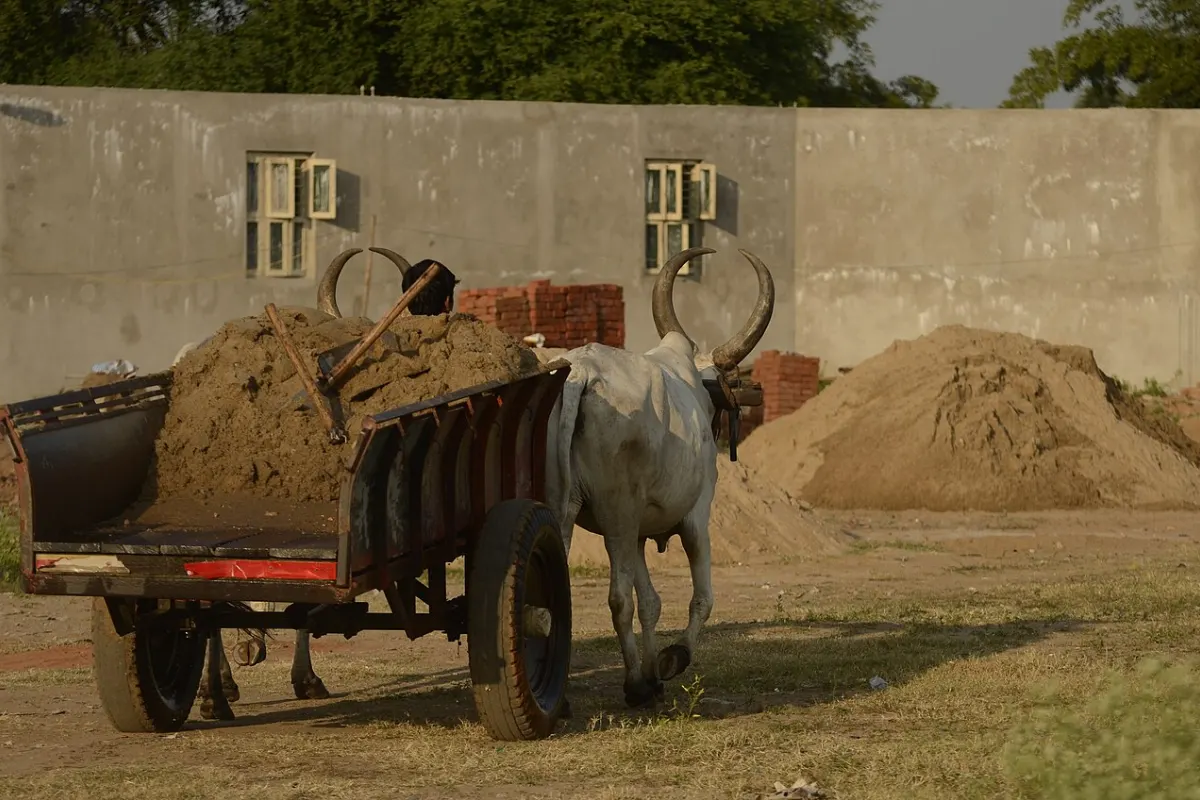
River sand is dug from riverbeds and banks. Its grains have been rolled by water for a long time, so they are rounded and smooth. Its quality depends on the river, the stretch and the depth it was dug from: it may carry silt, clay, shells or plant matter, and the size of its grains varies from load to load. Very fine river sand, often sold for filling, is too fine for concrete and plaster.
M-sand is made in a plant from hard rock such as granite or basalt. The rock is crushed in stages, and the final stage, usually a vertical shaft impactor, shapes the grains so they are more cube-like and less flaky. The sand is then washed or air-classified to control its dust, and screened to a set grading. Made well, it is consistent from load to load in a way river sand rarely is.

Grain, shape and the mix
The angular grains of M-sand lock together well and bond well with cement paste, which can give good strength. They also make a mix a little harsher to work, so concrete with M-sand is designed for it, usually with a plasticising admixture rather than extra water. Swapping one sand for the other in a mix designed for the first, without adjusting, is where problems start.
| River sand | M-sand | |
|---|---|---|
| Grain shape | Rounded and smooth | Angular and rough, more cube-shaped when well made |
| Fine particles | Silt and clay, which harm bond | Rock dust, less harmful but must be controlled |
| Grading | Varies by source and season | Set by the plant, consistent when the plant is well run |
| Water needed in a mix | Somewhat less | Somewhat more, usually met with an admixture in the mix design |
| Other impurities | Shells, plant matter, salt near the coast | None, if the rock is sound and clean |
| Supply | Seasonal and restricted | Steady from established plants |
What IS 383 says
IS 383:2016, the Indian standard for aggregates for concrete, covers natural sand and manufactured sand (which it calls crushed sand) alike. It sorts fine aggregate into four grading zones, numbered I to IV from the coarsest to the finest, by how much passes each sieve. The two middle zones are the usual choices for structural concrete; the finest needs the mix to be checked before it is used in reinforced concrete.
IS 383 limits the very fine material passing a 75 micron sieve, with a tighter limit for natural sand, where those fines are usually silt and clay, than for crushed sand, where they are mostly rock dust. It also limits clay lumps, soft particles and harmful salts. The test methods are in IS 2386. Sand for plaster is covered by IS 1542 and sand for masonry mortar by IS 2116, each with its own grading.
M-sand or crusher dust
Crusher dust is the fine waste left over at stone crushers that make aggregate for concrete. It is not washed, not shaped and not graded. It holds far too much powder, and its grains are often flaky. It looks a little like M-sand, it is much cheaper, and it is regularly sold as M-sand. In concrete it weakens the mix and demands more water; in plaster it cracks.
- Rub a handful between your palms: proper M-sand leaves little dust; crusher dust leaves your hands coated in powder.
- Look at the heap: a cloud of dust when it is tipped, and a very fine, grey, floury look, point to crusher dust.
- Ask for the plant's name and a test certificate with the grading and the fine content; a supplier who cannot give one is a warning.
- Watch the price: a load far cheaper than others is cheap for a reason.
- For larger jobs, have a sample tested in a laboratory before the order is placed.
Sand for concrete, masonry and plaster
M-sand plants usually sell separate grades for concrete and for plaster, sometimes called plaster sand. Using concrete-grade sand for fine plaster gives a rough, hard-to-finish surface; using fine plastering sand in concrete weakens it.
| Use | What it needs | Standard |
|---|---|---|
| Concrete | Well graded, usually in one of the two middle grading zones, clean, with fines within the limit | IS 383 |
| Brickwork and blockwork mortar | Graded, clean, without clay, which weakens and shrinks mortar | IS 2116 |
| Plaster | Finer grading for a smooth finish, very low fines and no clay, which cause cracking | IS 1542 |
| Filling under floors | Clean sand, compactable, free of rubbish | As the engineer specifies |
Checks on site
- Ask for the source, and for M-sand the plant's test certificate with grading and fine content.
- Look and feel: rub the sand between your fingers, and see whether it stains them or clouds when tipped.
- Do the field silt test in a measuring jar, as our sand and silt guide explains, on every new source.
- Allow for bulking: damp sand swells in volume, so batching by the box or the bucket needs adjusting when the sand is wet.
- For river sand, look for shells, plant matter and lumps of clay.
- For important work, send a sample to a laboratory for sieve analysis and the tests in IS 2386.
- Store sand on a hard, clean base, covered, with different grades kept apart.
Buying sand legally
River sand should come from a licensed source, with the transport papers the state issues for each load. The Ministry of Environment, Forest and Climate Change has published guidelines for sustainable sand mining and for enforcing them, and courts and the National Green Tribunal have acted repeatedly against illegal riverbed mining, which damages river banks, bridges and the water table. Illegal sand is cheaper because it skips all of this, and loads can be seized on the road. M-sand from an established plant carries its own invoice and certificate.
Around Kolkata
Sand for building in and around Kolkata comes mainly from riverbeds in the surrounding districts and from M-sand plants in the hard-rock areas to the west. Suppliers often sell by local names for coarse and fine sand rather than by IS zone, and the quality changes from load to load. Supply tightens and prices rise during the monsoon, when riverbed mining usually stops, which is when poor or illegal loads are most tempting.
Sand from tidal rivers and estuaries in the south can carry salt. Salt in concrete rusts the steel inside it, so sand from the sea, the beach or brackish water must never be used for reinforced concrete. If you are unsure where a load came from, a laboratory chloride test answers the question.
What we do
On our sites, sand is specified by use and grading, checked at delivery, silt-tested on each new source and, for structural concrete, tested in a laboratory, whether it is river sand or M-sand. Concrete mixes are designed for the sand that will actually be used. Our supply arm sources graded M-sand and licensed river sand with their papers.
River vs M-sand, honestly
| River sand | M-sand (manufactured) | |
|---|---|---|
| Availability | Restricted, often illegal to mine | Widely available, legal |
| Consistency | Varies by source and season | Consistent, factory-graded |
| Silt / clay | Can be high — needs the silt test | Low, but can carry stone dust instead |
| Water need | Slightly less | Slightly more (angular grains) |
The checks that still apply
- Ask for M-sand graded to IS 383, and specify concrete-grade vs plaster-grade for the right use.
- Reject plain crusher dust (unwashed, over-fine) sold as 'M-sand' — it weakens both concrete and plaster.
- Do a settling/silt test on any sand: excess silt or dust coats the grains and stops the cement bonding properly.
Questions people ask
Is M-sand as good as river sand for concrete?
Good M-sand, made from sound rock, well graded and with its dust controlled, gives concrete as strong as river sand when the mix is designed for it. Poor M-sand or crusher dust does not. Judge it by the tests, not the name.
Can M-sand be used for plaster?
Yes, plaster-grade M-sand, which is finer and has very little dust. Coarse concrete-grade M-sand or crusher dust gives rough plaster that tends to crack.
Why does concrete with M-sand need more water?
Its angular, rough grains need more paste to coat them and flow. The right answer is a mix designed for M-sand, usually with a plasticising admixture, not extra water added on site.
How can you tell crusher dust from M-sand?
Crusher dust is very fine and floury, coats your hands with powder and clouds when tipped; it has no test certificate. Proper M-sand is gritty and consistent, and comes from a named plant with a certificate.
Can sea sand be used for building?
Not for reinforced concrete. Sea, beach and estuary sand carry salt, which rusts the steel. It also often contains shells.
Does river sand need testing?
Yes. River sand varies from load to load in silt, clay and grading. A field silt test on every new source, and laboratory tests for structural work, are part of good practice.
Red flags
- Crusher dust supplied as 'M-sand' at a suspiciously low rate
- The same sand used for both concrete and fine plaster
- No grading zone information from the supplier
Pro tip
Sand quality silently decides concrete and plaster strength, and it's easy to be short-changed. Our supply arm specifies and checks graded M-sand for the right application on every Delta site.
Work it out: Slab Concrete Calculator
Sources
- IS 383:2016 Coarse and Fine Aggregate for Concrete, Specification (Bureau of Indian Standards) (checked 15 Nov 2026)
- IS 2386 Methods of Test for Aggregates for Concrete (Bureau of Indian Standards) (checked 15 Nov 2026)
- IS 1542 Sand for Plaster, and IS 2116 Sand for Masonry Mortars (Bureau of Indian Standards) (checked 15 Nov 2026)
- Ministry of Environment, Forest and Climate Change: Sustainable Sand Mining Management Guidelines, 2016, and Enforcement and Monitoring Guidelines for Sand Mining, 2020 (checked 15 Nov 2026)
Checked against these sources on the dates shown, pending our team’s sign-off.