Anti-termite treatment — when it must happen (hint: before the floor)
Effective termite protection is a pre-construction soil treatment: chemical emulsion applied to foundation pits, plinth fill and the soil under floors — creating a barrier termites can't cross — plus treatment along the external perimeter. Done at the right stages it's cheap and lasts years. Retrofitting protection after termites appear inside a finished home costs multiples and works worse.
Soil treatment is a vaccine; post-infestation drilling is chemotherapy. Same enemy, very different experience.
Termites live in the soil around and under most buildings in and around Kolkata. The kind that damage houses are subterranean: they nest in the ground and travel up into buildings through cracks, joints and gaps in floors and walls, often inside earthen tubes, to feed on anything made of wood or paper. By the time a door frame sounds hollow or a cupboard crumbles, a colony has usually been at work for months.
The most effective protection is built in before the floor is cast: a chemical barrier in the soil under and around the building, laid at set stages as the foundations and plinth go in, under IS 6313. This guide explains how termites get in, how the pre-construction treatment works stage by stage, what to check on site, the building details that help, how an existing building is treated, the signs of termites, what is different in Kolkata and what to ask a pest control firm. The Termite Check in our Lab scores the risk for your building.
How termites get in
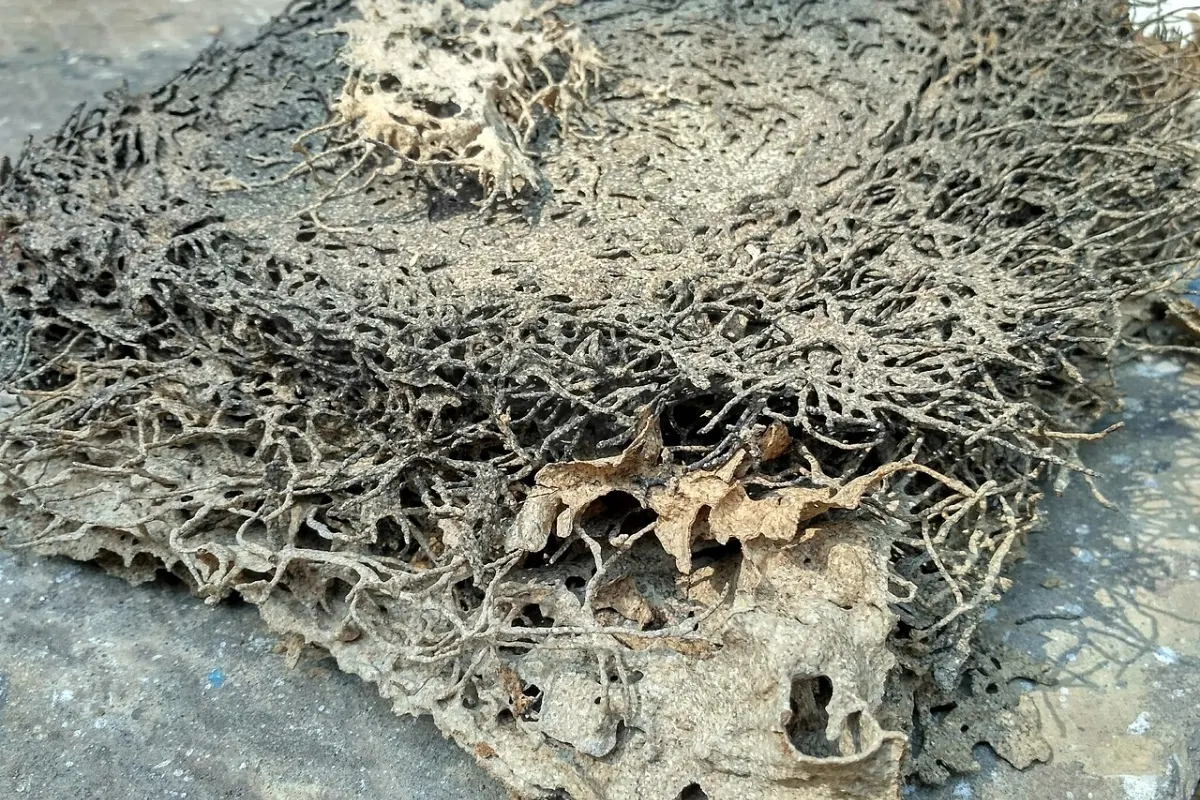
Subterranean termites need moisture and must stay hidden from the open air, so they move through the soil, through cracks and inside mud tubes, pencil-thick tunnels of earth they build up walls, plinths, pipes and wooden posts. They can pass through gaps far narrower than a pencil. They cannot eat concrete, but they come through it wherever it is cracked, jointed or pierced, and they tunnel through soft mortar and old plaster.
Damp draws them. A leaking pipe in a wall, a damp ground-floor room or soil heaped against an outside wall makes a building far more attractive, and wood in contact with damp soil is the easiest way in of all.
- Cracks in the floor and the plinth, and joints between floor and wall.
- Gaps round pipes, conduits and drains that pass through the floor.
- Expansion joints and the hollow cores of some blocks.
- Door frames set into the floor, and wooden posts, pegs or roots left in the ground.
- Soil, planters or stacked wood against the outside walls, which hide the tubes.
The pre-construction treatment
IS 6313 has three parts: Part 1 on the building details that keep termites out, Part 2 on the chemical treatment of the soil before and during construction (revised in 2022) and Part 3 on treating existing buildings. The chemical must be a termiticide registered by the Central Insecticides Board and Registration Committee (CIB&RC) for termite control in buildings, mixed with water to the strength its label and the standard give. It leaves a treated layer of soil that termites cannot cross without being killed or turned back.
The treatment is done in stages as the foundations and plinth go in, and each stage has to be done before the next piece of work covers it. The table shows the usual order.
| Stage | What is treated | When |
|---|---|---|
| Foundation pits and trenches | The bottom and sides of the excavation | After digging, before the lean concrete |
| Backfill | The earth refilled round the foundations and columns | As each layer is filled and compacted |
| Plinth fill | The top of the compacted earth inside the plinth | Before the floor bed is laid |
| Junctions and entries | Where walls meet the floor, round pipes and conduits through the floor | Before the floor is laid |
| Perimeter | The soil along the outside of the external walls | After the walls are up, before the apron or paving |
IS 6313 Part 2 sets the quantity of diluted chemical for each surface. Ask the firm for the quantities for your plot, and check the containers, their batch numbers and their dates against them.
What to check on site
- Put the treatment stages in the schedule before work starts, so that no pit is concreted and no plinth filled before the firm has been.
- Check the chemical: registered for termite control in buildings, in sealed containers, within its date.
- Watch the dilution being measured, not guessed, in clean water.
- Do not treat in rain or on waterlogged soil; the standard asks for dry conditions, so the chemical stays where it is put.
- Check the coverage: every surface for the stage wetted evenly with a sprayer, not splashed from a bucket.
- Keep the treated soil undisturbed until it is covered, and treat again any area dug up later, for a pipe or a cable.
- Ask for a record of each stage: the date, the area, the chemical, the quantity and who did it.
Building details that help
IS 6313 Part 1 sets out constructional measures that make a building harder for termites to enter. Most cost nothing extra if they are planned from the start.
- Clear all timber, roots, formwork offcuts and pegs from the site before the foundations are cast.
- Keep wood out of contact with the soil: door frames on a concrete or masonry sill, not buried in the floor bed.
- Seal the gaps round pipes and conduits where they pass through the floor and the walls.
- Lay a concrete or paved apron round the building, sloping away, so that water drains off and any tubes show.
- Keep the plinth visible: no soil, planters or stored wood heaped against the walls.
- Use treated timber, and plywood with a borer and termite treatment, for frames and furniture; our plywood guide covers it.
- Fix leaks and damp promptly, because termites follow moisture.
Treating an existing building
When termites are found in a finished building, IS 6313 Part 3 sets out the post-construction treatment. Holes are drilled at intervals along the junction of the floor and the walls inside and along the outside of the plinth, and the chemical is injected into the soil below to form a barrier; damaged woodwork is treated or replaced; the tubes are removed and the ways in found and sealed. It works, but it is slower, noisier and dearer than treatment during construction, and the barrier is rarely as complete.
- Find the extent: tubes, hollow wood, damaged papers and the ways in.
- Fix the moisture first: leaks, rising damp, blocked drains, soil against the walls.
- Drill and inject along the inside and outside of the walls at the spacing the standard and the label give.
- Treat the woodwork by injection and surface spray, and replace badly eaten timber.
- Seal the drilled holes and every gap found.
- Inspect again after a few months, and every year before the monsoon.
Signs of termites
- Mud tubes on walls, the plinth, pipes or the inside of cupboards.
- Wood that sounds hollow or papery when knocked, especially door frames and skirting.
- Paint on woodwork or walls that blisters or bubbles for no obvious reason.
- Winged termites near lights after the first rains, and their shed wings on window sills.
- Papers, books or clothes damaged at the bottom of a cupboard or a box on the floor.
- Small trails of soil coming out of cracks or the joints of a skirting.

What is different in Kolkata
Kolkata's warm, humid climate, its high water table and its damp ground floors suit subterranean termites, and they are common across the city and its suburbs. Swarms of winged termites after the first pre-monsoon and monsoon showers are a familiar sight. Old houses with timber beams and rafters, wooden stairs and old door frames are at particular risk, as are ground floors with gardens or planters against the walls, and buildings on filled land where organic matter was buried.
The weather also decides the timing of treatment. Wet soil in the monsoon makes the pre-construction stages hard to do well, so plan the foundations and plinth, and their treatment, for the dry months where you can. Termite control is also the reason we check under-floor treatment records before any wooden floor or built-in furniture goes into a ground-floor room.
Choosing a firm
Pest control firms vary a great deal. These are the questions we ask, and the answers should come in writing.
- Which chemical, is it registered with the CIB&RC for termite control in buildings, and at what strength?
- Which stages will be treated, and how much chemical for each, under IS 6313?
- Who will be on site, and will each stage come with a record?
- How long does the firm stand by its work, and what does it do if termites appear?
- For an existing building: where will the holes go, how will they be sealed, and how will the family, pets and water be protected?
Safety with termiticides
Termiticides are poisons, safe only when used as their label says. Keep children and pets away while the work is done, and ventilate the rooms afterwards. Keep the chemical away from wells, sumps, ponds and water tanks, and never wash equipment where the water can reach them. The workers should wear gloves, masks and eye protection, and empty containers should go back with the firm rather than into household use or the rubbish.
The treatment stages (IS 6313)
- Foundation pits: sides and bottom treated before concreting.
- Plinth fill: each layer of earth fill treated as it's compacted.
- Under-floor: soil treated before the base concrete of ground floors.
- Perimeter: a treated trench along external walls after construction.
If the building already exists
Drill-and-inject along the plinth creates a barrier retroactively — effective, but costlier and more disruptive. Pair it with fixing damp, since termites follow moisture.
Questions people ask
When should anti-termite treatment be done in a new building?
In stages during construction: the foundation pits, the backfill, the plinth fill before the floor bed, the junctions and pipe entries, and the soil along the outside walls. It cannot be done properly once the floor is cast.
Can termites come through a concrete floor?
They cannot eat concrete, but they come through its cracks, joints, expansion joints and the gaps round pipes. That is why the soil under the floor is treated and the gaps are sealed.
Is treatment after construction as good as treatment before?
It works, but it is more disruptive and rarely as complete, because the barrier has to be made by drilling and injecting through finished floors and walls. Treatment during construction is cheaper and more thorough.
How long does soil treatment last?
It depends on the chemical, the dose and the soil. Ask the firm in writing how long it stands by its work, and inspect the building every year before the monsoon.
Are winged insects after rain always termites?
Not always; winged ants swarm too. Termite swarmers have straight antennae, a thick waist and two pairs of wings of the same length, which they shed. Shed wings on window sills are worth checking.
Is the chemical safe for the family?
Registered termiticides are safe when used as the label says. Keep children and pets away during the work, ventilate the rooms, keep the chemical away from wells, sumps and tanks, and make sure the workers wear protection.
Red flags
- Woodwork planned in a ground-floor unit with no record of soil treatment
- Mud tubes (pencil-thick earthen tunnels) on plinth or walls — active termites
- 'We'll spray if they come' as the plan
Pro tip
We schedule anti-termite treatment as fixed stage-gates in new construction — it can't be added properly after the floor is cast, so it never gets skipped.
Try it in our Lab: Termite Check
Seeing this at home? Termites in the house? Tick what you see and we tell you what it most likely means.
Sources
- IS 6313 (Part 1), (Part 2):2022 and (Part 3), Anti-termite Measures in Buildings (Bureau of Indian Standards) (checked 15 Nov 2026)
- Central Insecticides Board and Registration Committee: registered pesticides (Directorate of Plant Protection, Quarantine and Storage) (checked 15 Nov 2026)
Checked against these sources on the dates shown, pending our team’s sign-off.