Cracks in the walls after the rains?
Most cracks people notice after the rains are thin, random hairlines in the plaster, and they are usually cosmetic. A crack that is wide (3 mm or more), runs diagonally from a door or window corner, steps through the brick joints, runs long and horizontal, shows in a beam, column or slab, or keeps growing can be structural: have it assessed before anyone fills it.
From our guide Structural crack vs shrinkage crack. Checked 26 Nov 2026.
What the shape and width tell you
- A fine web of hairlines in the plaster: Usually the plaster shrinking as it dried: filled at the next repaint. Tell us if a line grows or new ones appear.
- A thin, straight crack, under 1 mm: Often shrinkage or minor settling. Pencil-mark both ends with the date and look again each month.
- Diagonal from a door or window corner, or stepped through the brick joints: The patterns engineers check for settlement or load: get it assessed before anyone fills it.
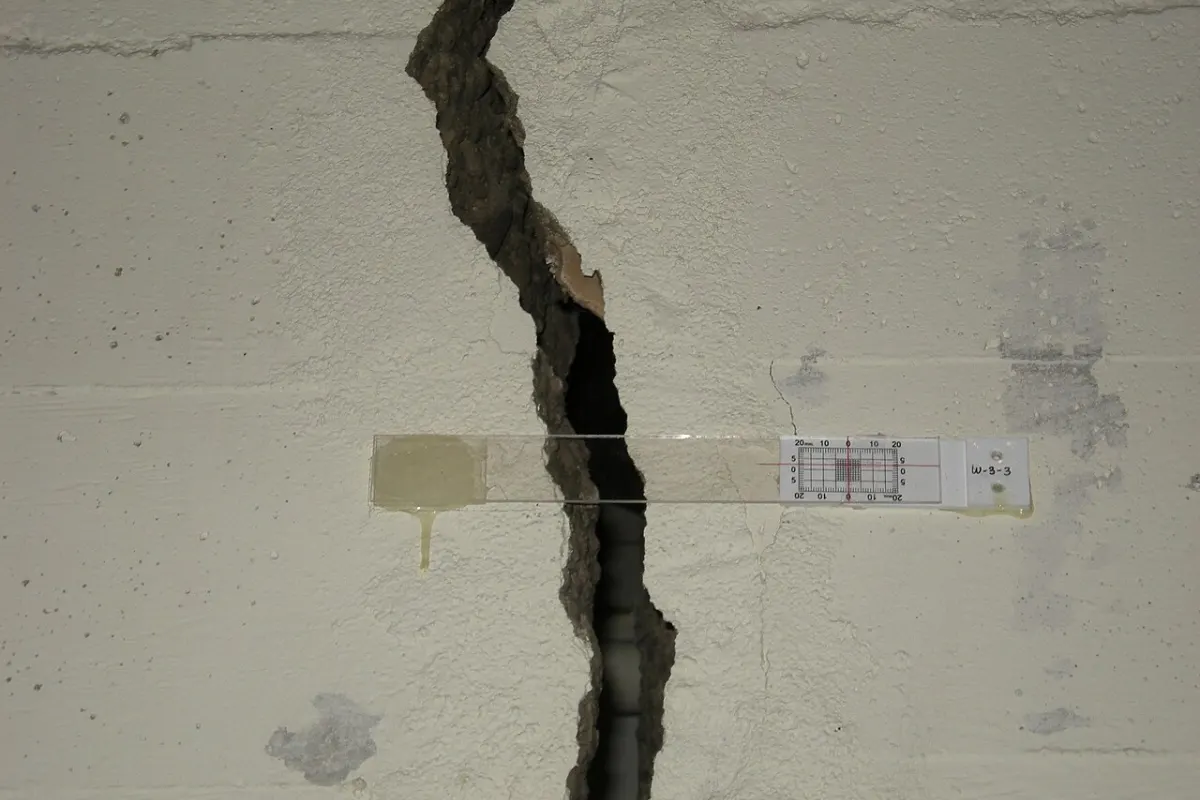
- 3 mm or wider, or still growing: A bank card’s edge is about 0.8 mm. Width and growth are what move a crack from cosmetic to structural.
- In a beam, column or slab, or long and horizontal: It can mean the structure is moving or the steel inside is rusting. Please don’t fill it first: the crack is what an engineer reads.

Five repairs, and when each one is right
Filling a crack’s surface and repairing a crack are different acts. A crack is a symptom: the order is always find the cause, stop the cause, repair the crack, then watch it.
| Repair | What it does | Right when |
|---|---|---|
| Fill and repaint | Hides it | A web of fine plaster hairlines that has stopped moving |
| Route and seal | Lets it move | A non-structural crack that opens and closes with the seasons |
| Epoxy injection | Rejoins it | A dormant crack of 0.2 to 5 mm in a beam, column or slab, its cause found and stopped |
| PU injection | Stops water | A crack that leaks or stays wet; it seals, it does not restore strength |
| Stitching | Spreads the load | A wider or moving crack, done with the fix for its cause, never instead of it |
We read the crack before anyone fills it.
A crack is a symptom. Our engineers can look at its shape and width on site and give you their view on what is behind it.
Free preliminary estimate: Send us a photo with a coin or a ruler beside the crack. Usually within 48 hours.*
Assessment and site visit, ₹2,499: An engineer looks at the crack, the walls around it and the structure across Kolkata (₹4,999 for the outskirts, on request), adjusted against the contract if you go ahead with us.
*Indicative, not guaranteed. Timing varies with the complexity of your query.
The services that fix it
- Crack Repair & Structural Rehabilitation: We find the cause first, then repair: grouting, stitching or jacketing, as the engineering calls for. (Retrofitting)
- Structural Audit & Stability Certification: You get a formal stability report for your society, bank or the authority, signed and stamped by qualified engineers. (Engineering Consultancy)
- Structural Health Monitoring: We fit crack gauges and run periodic inspections for a building under watch. (Retrofitting)
- Plastering & Wall Finishing: We plaster to an even thickness and cure it properly, so it takes paint without map cracking. (Civil Contracting)
Read more, check more
- Structural crack vs shrinkage crack (guide, 16 min)
- Epoxy injection and crack stitching: how real crack repair works (guide, 9 min)
- Crack Decoder: Draw the crack, set its width, tick the warning signs: a reading in about a minute.
Rain moves soft ground: much of Patuli is urbanised wetland on clayey soil, and in July 2025 cracks in the platform piers at Kavi Subhash metro were linked to soil subsidence after heavy rain. It is why we soil-test every plot before designing its foundation.
Questions people ask
Can we just fill the crack and paint over it?
For a fine web of plaster hairlines, yes, at the next repaint. For anything wide, diagonal, stepped, horizontal or in a beam, column or slab, no: filling it first hides what an engineer needs to read, and a crack whose cause is still live reopens beside the repair.
How do we know if a crack is growing?
Pencil-mark both ends of the crack with the date and look again each month. A crack monitor fixed across it shows even small movement. A crack that grows, or a door nearby that starts to jam, needs an engineer’s look.
Which cracks need an engineer soon?
Cracks 5 mm or wider, long horizontal cracks, and cracks in a beam, column or slab. Diagonal cracks from a door or window corner and cracks stepping through the brick joints should be assessed too.
Sources
- BRE Digest 251 (damage categories)
- IS 456:2000 cl. 35.3.2
- Our guides: Structural crack vs shrinkage crack; Epoxy injection and crack stitching
- Garia area guide (Kavi Subhash metro, July 2025)
Checked 26 Nov 2026 by Delta Structures.